


7 Tips for Choosing Industrial Biotechnology Solutions
Industrial biotechnology solutions are moving from laboratory promise to factory-floor decisions. Companies now use engineered microbes, enzymes, fermentation systems, and bio-based feedstocks to reduce waste, energy use, and dependence on fossil inputs. The McKinsey Global Institute’s 2020 report, The Bio Revolution, estimated that biological applications could create up to $4 trillion in annual economic impact by 2030–2040. That figure is impressive, but it is not a purchasing guarantee.
Choosing the right solution requires more than comparing glossy sustainability claims. A plant manager should examine feedstock stability, fermentation yield, downstream processing, contamination controls, and total cost per kilogram. The International Energy Agency also stresses that clean manufacturing depends on measurable lifecycle performance, not marketing language. Small details matter. A promising strain may fail under industrial heat. A low-carbon feedstock may travel thousands of kilometres. These gaps deserve honest attention.
Frances Arnold, Nobel Prize-winning chemist and a leading voice in enzyme engineering, has said, “There is no substitute for evolution.” Her point applies directly to industrial biotechnology solutions: biological systems need testing, adaptation, and evidence. Pilot data should connect clearly with commercial performance. Independent validation helps. So does a realistic scale-up plan.
The seven tips ahead focus on practical selection. They consider technical fit, supplier expertise, regulatory readiness, environmental impact, integration costs, data quality, and long-term resilience. No solution is perfect. That is the uncomfortable part. A careful choice may still need revision after the first production run.
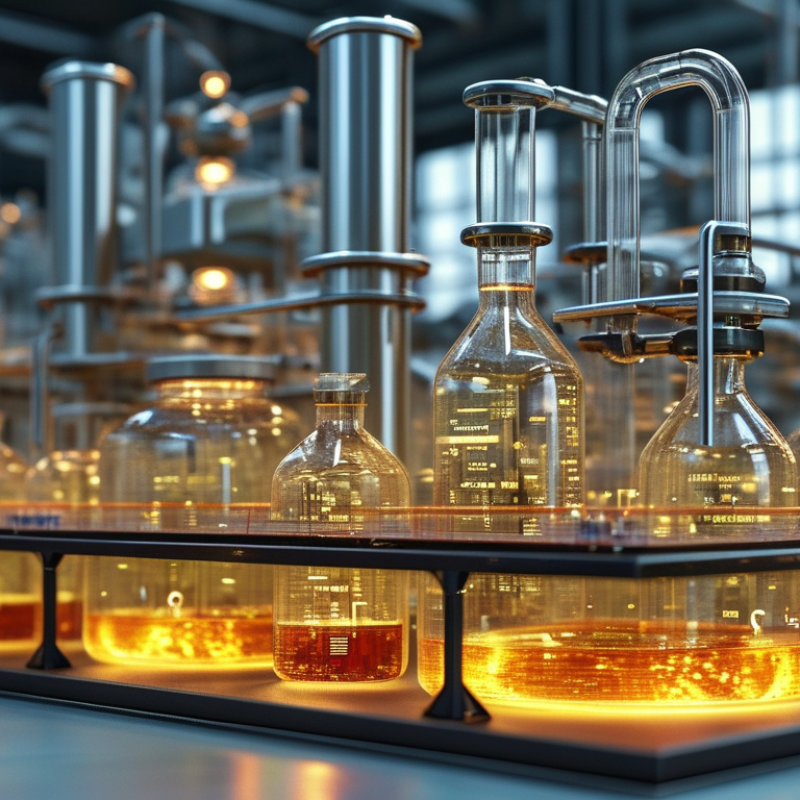
Define the Industrial Biotechnology Problem and Desired Outcomes
Before selecting an industrial biotechnology solution, define the problem in measurable terms. Is the plant facing high energy use, unstable fermentation, waste disposal costs, or inconsistent product quality? Record the baseline: feedstock volume, yield, cycle time, emissions, and operating cost. A 2020 global bioeconomy analysis estimated that biological processes could address about 60% of physical input demands across the economy. That figure is ambitious, not guaranteed. Real plants often reveal hidden constraints, such as contamination risk or limited operator skills.
Tip: Write the desired outcome as a number. “Reduce solvent use by 20%” is stronger than “be more sustainable.” Include a deadline, acceptable quality range, and safety requirement. The International Energy Agency reports that chemicals demand for materials could nearly double by 2050 under current trends. This pressure makes resource efficiency important, but a laboratory result does not prove commercial value. Pilot data must confirm productivity, reliability, and total lifecycle cost.
Tip: Define failure before approving success. Set limits for downtime, yield loss, waste generation, and recovery cost. Speak with production, maintenance, quality, and environmental teams before choosing a pathway. Their experience may expose a problem that technical tests miss. Be willing to revise the target. An impressive yield can still fail when raw materials vary, cleaning takes too long, or the process cannot scale safely.
7 Tips for Choosing Industrial Biotechnology Solutions - Define the Industrial Biotechnology Problem and Desired Outcomes
Problem-definition matrix for translating an industrial biotechnology challenge into measurable technical, economic, operational, and sustainability requirements.
| No. | Problem Dimension | Current-State Signal | Desired Outcome | Primary KPI and Unit | Acceptance Criterion | Recommended Validation Method |
|---|---|---|---|---|---|---|
| 1 | Product concentration | Low fermentation titer increases broth volume, vessel occupancy, heating demand, and downstream separation load. | Increase final product concentration while maintaining product quality and biological stability. | Titer: 20 → ≥50 g/L | At least 50 g/L in three consecutive pilot-scale runs with no critical impurity increase. | Validated HPLC or LC-MS assay; mass balance across the fermentation step. |
| 2 | Substrate-to-product conversion | Substrate is consumed but a significant fraction is converted to biomass, by-products, or residual organics. | Improve carbon conversion and reduce raw-material loss and waste-treatment demand. | Yield: 0.25 → ≥0.40 g/g | Minimum 0.40 grams of product per gram of consumed substrate, calculated on a dry-mass basis. | Substrate and product quantification by HPLC; carbon balance closure of at least 90%. |
| 3 | Production rate | Long batch duration limits annual capacity and increases exposure to contamination, process drift, and equipment downtime. | Shorten the production cycle without reducing titer, yield, or product consistency. | Productivity: 0.4 → ≥1.0 g/L/h | Volumetric productivity of at least 1.0 g/L/h over the defined production phase. | Time-resolved sampling; calculate productivity from product formed divided by working volume and production time. |
| 4 | Downstream recovery | Product losses occur during cell removal, clarification, concentration, purification, or drying. | Recover more saleable product and reduce the amount of feedstock required per finished kilogram. | Recovery: 70% → ≥85% | Overall recovery of at least 85% from fermentation harvest to finished product. | Stage-by-stage mass balance; assay product concentration in feed, intermediate, and final streams. |
| 5 | Operating cost | Raw materials, utilities, labor, and waste handling create a high conversion cost relative to the product value. | Reduce conversion cost while preserving regulatory, safety, and product-quality requirements. | Conversion cost: $5.00 → ≤$3.00/kg | Fully loaded conversion cost at or below $3.00 per kilogram at the planned production scale. | Techno-economic analysis including feedstock, utilities, labor, consumables, depreciation, and waste treatment. |
| 6 | Energy intensity | High aeration, agitation, heating, cooling, evaporation, or drying requirements increase operating cost and emissions. | Lower energy demand per unit of product while maintaining process control and product specifications. | Energy use: 18 → ≤12 kWh/kg | Total measured process energy no higher than 12 kWh per kilogram of finished product. | Submetering of major equipment; include electricity, steam, compressed air, refrigeration, and drying energy. |
| 7 | Scale-up and compliance risk | Laboratory performance may not translate to production because of oxygen-transfer limits, heat removal, mixing, contamination, or inconsistent raw materials. | Select a solution with a defined scale-up path, reproducible performance, and documented quality controls. | Successful runs: ≥3/3 | Three consecutive pilot-scale batches meet critical quality attributes, yield, productivity, and contamination-control requirements. | Design-of-experiments study, process-capability analysis, oxygen-transfer assessment, and documented deviation review. |
Related Posts
-
Why Are Bioprocess Automation Systems Essential for Modern Biotechnology?
-
How to Optimize Biotech Manufacturing Processes for Efficiency
-
How to Choose the Best Sterilization and Cleaning Systems?
-
How to Choose the Best Sterilization and Cleaning Systems?
-
How to Optimize Pilot Scale Bioprocessing in 2026?
-
How to Improve Pharmaceutical Production Technology for Global Supply?