


What Is the Best Peek Interference Screw in 2026?
Choosing the best Peek Interference Screw in 2026 is not simply a brand comparison. The right option depends on the graft, bone quality, tunnel dimensions, and the surgeon’s fixation plan. A screw that looks ideal in a catalog may not suit every reconstruction. Small details matter: thread geometry, diameter, length, insertion feel, and compatibility with the graft.
Dr. Freddie H. Fu, a prominent ACL surgeon and researcher, is known for advancing careful, anatomy-focused approaches to ligament reconstruction. A concise principle consistent with that clinical perspective is: “Match fixation to the graft, tunnel, and patient—not to the trend.” This is an editorial summary, not a verbatim quotation. It captures why a single screw cannot be called best for every case.
PEEK offers a radiolucent alternative to metal, which can help clinicians assess surrounding structures on imaging. But material alone does not guarantee stronger fixation or better outcomes. Design, surgical technique, and patient factors remain important. Look closely at published mechanical testing, clinical evidence, device specifications, and the manufacturer’s instructions. Ask what evidence supports the screw’s use in the specific procedure.
There are trade-offs. Some details remain uncertain, and product claims deserve scrutiny. This guide compares the features that matter in 2026, helping readers distinguish measurable performance from marketing language. The goal is informed discussion with a qualified orthopedic professional—not a universal recommendation.
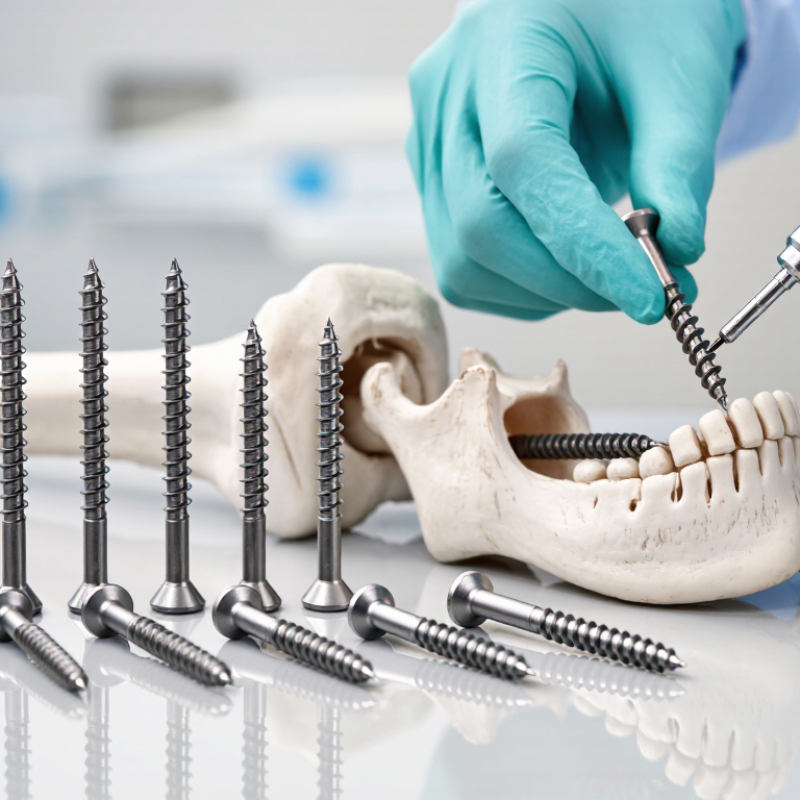
What a PEEK Interference Screw Is and How It Works
What Is the Best PEEK Interference Screw in 2026?
A PEEK interference screw is used to secure a tendon graft during procedures such as ACL reconstruction. The surgeon places it between the graft and the wall of a drilled bone tunnel. As the screw advances, it compresses the graft against bone, helping hold it in place while healing occurs. That is the basic idea. Fit and placement matter.
PEEK, or polyether ether ketone, is a strong polymer that is generally radiolucent, so it creates less imaging obstruction than metal. A review by Kurtz and Devine in Biomaterials reported PEEK’s elastic modulus at about 3–4 GPa, compared with roughly 10–20 GPa for cortical bone. These are material measurements, not proof of better healing. Clinical results also depend on graft type, tunnel position, bone quality, and rehabilitation. The “best” screw is therefore not one-size-fits-all.
Tips: Check screw diameter and length against the tunnel and graft, and follow the surgeon’s technique and device instructions. Ask how the implant may appear on follow-up imaging. Small details count. Even good hardware cannot correct poor placement, and that is worth remembering.
| Topic | Evidence-Based Overview | Why It Matters When Comparing Screws |
|---|---|---|
| What it is | A PEEK interference screw is an implant made from implant-grade polyether ether ketone (PEEK). In ligament reconstruction, it is commonly used to secure a tendon graft within a drilled bone tunnel. | It is a fixation device, not a replacement ligament. Its suitability depends on the graft, tunnel, procedure, and surgeon’s technique. |
| How fixation works | The screw is inserted alongside the graft inside the bone tunnel. Its threads press the graft against the tunnel wall, producing mechanical compression and initial fixation. | Secure fixation depends on factors including screw dimensions, graft size, bone quality, tunnel preparation, and correct placement. |
| Common clinical use | Interference screws are used in selected ligament and tendon reconstruction procedures, including some anterior cruciate ligament (ACL) reconstructions. | Fixation methods vary by procedure and graft type. A screw appropriate for one reconstruction may not be appropriate for another. |
| Material behavior | PEEK is a strong, implant-grade thermoplastic. Its elastic modulus is commonly reported at roughly 3–4 GPa, although values vary by material formulation and testing method. | Material properties are one part of performance; screw geometry, implantation technique, and the surrounding bone and graft also matter. |
| Imaging characteristics | PEEK is radiolucent on standard X-rays and generally causes less imaging artifact than many metal implants. It is not necessarily invisible on every imaging study; design features and imaging technique can affect visibility. | Consider how the implant will be assessed on postoperative imaging. Radiographic visibility may differ if a device incorporates a marker. |
| Resorption | PEEK is a non-bioresorbable material. It is not designed to dissolve or be replaced by bone in the way that some bioabsorbable materials are. | Material preference should reflect the clinical plan and the intended long-term presence of the implant. |
| Potential advantages | PEEK offers a stable, nonmetallic option and is radiolucent. Its properties can be useful when clinicians want to avoid a conventional metal screw. | These characteristics do not establish that PEEK is superior for every patient or reconstruction. |
| Potential limitations | PEEK does not resorb, and radiolucency can make the screw itself less conspicuous on plain X-rays. As with other implants, complications may include fixation problems, infection, or the need for further treatment. | Discuss imaging needs, material considerations, and procedure-specific risks with the treating surgeon. |
| What “best” means | There is no universally best PEEK interference screw for 2026. The best choice is the device that is appropriate for the planned procedure, graft and tunnel dimensions, bone conditions, and the surgeon’s established technique. | Compare intended use, available sizes, screw design, imaging features, and applicable clinical evidence rather than relying on a single overall ranking. |
| Key selection checks | Confirm that the device is indicated for the intended procedure; that its dimensions match the planned graft and bone tunnel; and that its instructions for use and imaging characteristics are understood. | Device selection and treatment decisions should be made by a qualified clinician using patient-specific information. |