Top 10 Biotechnology Production Systems for Global Buyers

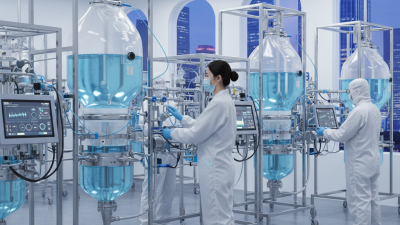
Biotechnology production systems are becoming strategic infrastructure for global buyers, not merely equipment choices. A buyer may compare stainless-steel bioreactors, single-use platforms, modular facilities, cell-based production lines, and continuous processing units. Each option changes capacity, validation effort, operating cost, and supply-chain exposure.

The World Health Organization’s Global Vaccine Market Report highlights continuing pressure for resilient, geographically distributed manufacturing. Its findings show why buyers increasingly examine regional capacity, technology transfer, cold-chain requirements, and supplier reliability together. The BioPlan Associates Annual Report also tracks persistent industry interest in single-use technology, outsourcing, and bioprocessing capacity. These signals support a practical question: which production model fits the product, market, and risk profile?

Details matter. A 2,000-liter vessel, a preassembled cleanroom, or a disposable mixing bag can reshape a project’s timeline. Deloitte’s 2024 Global Life Sciences Outlook emphasizes digital operations, manufacturing resilience, and productivity improvements. Meanwhile, FDA guidance continues to stress process control, data integrity, contamination prevention, and consistent quality. Compliance is not an afterthought.

No ranking is universal. That caveat matters. A system suitable for vaccines may perform poorly for recombinant proteins or advanced therapies. Regional utilities, workforce skills, validation standards, and after-sales service can also change the final decision. This guide reviews ten biotechnology production systems through a buyer-focused lens, using technical capability, scalability, quality expectations, and commercial practicality. Some market data remains uneven across regions, so careful due diligence is still necessary. Evidence helps, but real production conditions decide.
Top 10 Biotechnology Production Systems for Global Buyers

Biotechnology Production Systems: Definition, Scope, and Core Functions

Biotechnology production systems are coordinated environments for making biological products safely, consistently, and at commercial scale. Their scope includes cell or microbial growth, media preparation, bioreactors, separation, purification, formulation, storage, and quality control. It also covers clean utilities, process monitoring, data management, equipment maintenance, and waste handling. Each function supports product identity, strength, purity, and stability.

A reliable system connects laboratory findings with repeatable manufacturing steps. Operators monitor temperature, pressure, pH, dissolved oxygen, and contamination risks during production. Analytical testing checks materials at several points, not only at the end. Documented procedures improve traceability and training. Still, no system is perfect. Small sampling errors or weak data records can affect a large batch. Practical experience often reveals problems that a polished process map misses.

Tips: Define the intended product and scale before selecting equipment. Confirm cleaning, validation, maintenance, and emergency procedures early. Keep critical data reviewable by independent personnel. Compare actual process results with approved specifications, and investigate unusual trends instead of ignoring them. Flexible systems can support future improvements, but excessive complexity may increase operating errors. Human judgment remains important, even when automation is strong.

Main Categories of Systems Used in Biotechnology Manufacturing

Biotechnology manufacturing relies on several system categories, each serving a different production stage. Upstream systems include seed trains, cell culture vessels, microbial fermenters, and controlled bioreactors. They manage temperature, oxygen, pH, mixing, and nutrient delivery. Small changes matter.

Downstream systems recover and purify the target material. Common categories include centrifugation, depth filtration, membrane filtration, chromatography, and buffer preparation units. Single-use assemblies can reduce cleaning requirements and cross-contamination risks. Stainless-steel systems may suit large, repeated campaigns. The correct choice depends on product sensitivity, batch size, facility design, and operator capability. In practice, integration is often harder than purchasing individual equipment. Some systems look efficient on paper but create transfer delays during production.

Tips: Evaluate the complete workflow, not only the main vessel. Check material compatibility, sensor accuracy, automation access, and spare-part availability. Ask suppliers for documented performance data and realistic maintenance requirements. Buyers should also review scale-up behavior using pilot studies. A system that performs well at laboratory scale may respond differently in a larger vessel. That gap deserves careful attention. Keep room for process changes, because early specifications are rarely perfect. Reliable production also depends on trained personnel, clear records, and repeatable operating procedures.

Top Ten Production Systems for Global Buyers

Top Ten Production Systems for Global Buyers

Global buyers now compare more than output volume. They assess consistency, traceability, energy use, and transferability across regions. Ten production systems deserve close attention: microbial fermentation, mammalian cell culture, insect cell culture, plant-based production, algal cultivation, tissue culture, cell-free synthesis, enzyme bioconversion, modular single-use processing, and continuous bioprocessing.

Each system has a practical advantage. Fermentation can scale efficiently for many enzymes and specialty ingredients. Mammalian cultures support complex proteins but require strict environmental control. Plant and algal systems may reduce selected resource demands, yet seasonal variation can complicate planning. Cell-free methods offer speed, although their economics remain uneven. In my experience, pilot data often looks stronger than full-scale performance. That gap deserves honest review. A polished capacity chart is not proof of reliable supply.

Tips: Ask for batch records, validation evidence, contamination controls, and change-management procedures. Check whether raw materials remain available in your target region. Request a small trial before signing a large contract. Compare waste handling and cold-chain needs, not only unit price. Also examine technical support during process transfer. A cheaper system can become expensive when training is weak. Build a scorecard covering yield, lead time, quality variation, documentation, and emergency capacity. Leave room for uncertainty. Some systems still lack enough long-term operating data.

This comparison uses representative production-scale benchmarks rather than company sales, market share, or brand performance. Actual working volumes vary by product type, facility design, regulatory requirements, and process maturity. Large-scale fermentation generally supports the highest volumes, while cell-free and viral-vector systems are typically operated at smaller scales because of their specialized applications.

Evaluation Criteria: Scale, Quality, Cost, and Regulatory Compliance

Top 10 Biotechnology Production Systems for Global Buyers

Evaluation Criteria: Scale, Quality, Cost, and Regulatory Compliance

Global buyers should compare ten systems: microbial fermentation, mammalian culture, insect cells, plant platforms, cell-free synthesis, viral-vector production, mRNA manufacturing, continuous processing, single-use systems, and modular facilities. Scale is not only vessel volume. It includes seed-train speed, supply security, and production flexibility. Grand View Research estimated the global bioprocessing market at about US$19.9 billion in 2023, with strong growth expected through 2030. That growth may hide uneven regional capacity.

Quality requires validated controls for contamination, identity, potency, and batch consistency. Regulatory compliance adds documentation, traceability, and facility qualification. The International Council for Harmonisation expects a science-based risk approach across the product lifecycle. Single-use equipment can reduce cleaning demand and initial capital costs. However, waste handling and material supply remain practical weaknesses. Continuous processing may improve consistency, yet many teams still lack experienced operators. Cost models can mislead when they ignore failed batches, cold-chain losses, and inspection delays.

Tips: Score each system from one to five for scale, quality, cost, and compliance. Request recent batch records and deviation data. Check supplier audit histories. Test assumptions with a small pilot. No scorecard is flawless. Recheck it after regulatory feedback. WHO’s Global Vaccine Market Report recorded approximately 16 billion vaccine doses supplied in 2021, showing why scalable, compliant production matters. Smaller facilities can still compete when quality evidence is unusually strong.

Selecting and Comparing the Right System for International Procurement

Selecting among ten biotechnology production systems requires more than comparing quoted prices. Buyers should match the system to product complexity, batch size, delivery region, and regulatory pathway. Bacterial and yeast fermentation often suit robust proteins and enzymes. Mammalian, insect, plant, fungal, and algal systems offer different expression profiles. Cell-free production and enzymatic biocatalysis can reduce culture time. Continuous perfusion may support steady output, but it demands stronger process control. The best system depends on evidence.

For international procurement, request a comparable technical dossier from every supplier. It should cover host strain or cell line history, raw-material controls, contamination testing, scalability data, yield, recovery steps, and lot-release methods. Ask how the process performs at pilot and commercial scale, not only in a polished laboratory report. Review facility qualification, change-control procedures, worker training, and traceability. Documents matter. So do real samples.

Commercial comparisons should include cold-chain needs, import permits, local service capacity, spare parts, lead times, and waste handling. A lower unit price may hide difficult validation or repeated customs delays. Buyers should test communication during a mock deviation, such as an out-of-range temperature record. That exercise reveals response quality. No system is perfect. A cautious procurement plan keeps two qualified supply options where feasible and records the assumptions behind each score. Some evaluations still rely on incomplete data; that weakness should remain visible, not buried in a spreadsheet.

Top 10 Biotechnology Production Systems for Global Buyers - Selecting and Comparing the Right System for International Procurement

Comparative procurement guide based on typical commercial bioprocessing characteristics, global technology maturity, scalability, and supply-chain considerations.

Rank Production System Typical Biological Platform Representative Products Typical Commercial Scale Typical Production Cycle Indicative Output Metric Relative Capex GMP Maturity International Procurement Strength Primary Procurement Considerations Best-Fit Buyer Profile
1 Microbial Fed-Batch Fermentation Bacteria, especially engineered Gram-negative or Gram-positive strains Recombinant proteins, enzymes, plasmid DNA intermediates, amino acids, and metabolites 1,000–200,000 L fermentation vessels 1–3 days of fermentation, excluding downstream processing Often approximately 1–20 g/L for selected recombinant products; highly product-dependent Medium High Broad equipment availability, established raw-material supply, and relatively short production cycles Endotoxin removal, inclusion bodies, oxygen-transfer capacity, genetic stability, and waste treatment Buyers seeking high-volume, cost-efficient production of relatively simple proteins or industrial biotechnology products
2 Yeast Fed-Batch Fermentation Engineered yeast capable of secretion or intracellular expression Enzymes, vaccine antigens, recombinant proteins, organic acids, and specialty ingredients 1,000–200,000 L fermentation vessels 2–5 days of fermentation Commonly about 0.5–10 g/L for recombinant products, with wide variation by strain and process Medium High Robust industrial fermentation infrastructure and good tolerance to variable process conditions Glycosylation differences, foam control, oxygen demand, heat removal, and strain-containment requirements Global buyers requiring scalable protein or enzyme production with a balance of cost and process robustness
3 Mammalian Suspension Fed-Batch Suspension-adapted mammalian cells used in chemically defined media Monoclonal antibodies, recombinant therapeutic proteins, and selected vaccine products 2,000–25,000 L single-use or stainless-steel bioreactors 10–20 days of cell culture, followed by harvest and purification Approximately 1–10 g/L for many antibody processes; product and cell-line dependent High Very High Most established platform for complex therapeutic proteins and global regulatory submissions Long lead times, high media costs, contamination control, cold-chain needs, and extensive comparability studies Pharmaceutical buyers prioritizing regulatory precedent, human-like product quality, and large commercial batches
4 Mammalian Perfusion Culture High-density suspension mammalian cells retained by a filtration or cell-retention device Antibodies, recombinant proteins, and products requiring continuous or intensified manufacture 100–2,000 L working-volume bioreactors, often operated for extended campaigns 20–60 days or longer, depending on campaign design Often evaluated as approximately 0.1–2 g/L/day rather than by batch titer High High Smaller footprint and potentially higher facility utilization than conventional fed-batch operation Membrane fouling, steady-state control, longer contamination exposure, process monitoring, and validation complexity Buyers with limited facility space or demand for high annual output from moderate working volumes
5 Insect-Cell and Baculovirus Production Suspension insect cells infected with engineered baculovirus vectors Virus-like particles, vaccine antigens, recombinant proteins, and some viral vectors 50–2,000 L bioreactors; larger scales are possible with process qualification 3–7 days after infection, excluding seed preparation and purification Product-specific; commonly assessed by antigen concentration, particle yield, or infectious units Medium High Faster development than many mammalian systems and suitable for complex proteins and particles Virus-seed consistency, baculovirus carryover, proteolysis, infection timing, and downstream impurity clearance Buyers needing flexible production of particulate antigens or complex proteins at moderate scale
6 Suspension Viral-Vector Manufacturing Engineered suspension mammalian cells for transient or stable vector production Viral vectors for gene-delivery research, clinical development, and selected commercial therapies 50–2,000 L bioreactors, depending on vector type and required dose volume 3–10 days for production after cell preparation and transfection or induction Measured using vector genomes, infectious units, or functional potency; metrics are not interchangeable High High Single-use systems support flexible multi-product facilities and reduce cleaning validation burden Low recovery, scale-dependent potency, residual DNA and host-cell proteins, raw-material variability, and analytical complexity Gene-therapy developers and contract manufacturers requiring flexible, closed, and scalable vector production
7 Adherent Cell Culture in Fixed-Bed or Packed-Bed Bioreactors Anchorage-dependent mammalian, insect, or other adherent cells Viral vectors, cell-derived vaccines, exosomes, and specialized cell-secreted products Approximately 100–5,000 m² of effective growth surface, depending on equipment design 5–20 days, including cell expansion and production Reported per surface area, such as vector units or product mass per cm² or m² High High Useful for cell types that do not adapt well to suspension and can reduce manual vessel handling Scale-up is based on surface area rather than volume, sensor access is limited, and harvesting may be difficult Buyers working with adherent cells or products whose performance depends on a surface-attached culture format
8 Plant Transient Expression Whole plants or plant tissues temporarily expressing an introduced gene Research reagents, vaccine antigens, antibodies, enzymes, and other recombinant proteins From laboratory growth rooms to multi-ton plant-biomass campaigns Approximately 5–14 days after gene delivery, excluding plant growth Often reported as milligrams or grams of target protein per kilogram of fresh biomass Medium Medium to High Rapid product development and comparatively low dependence on large stainless-steel bioreactors Biomass consistency, downstream extraction, agricultural containment, seasonal logistics, and product glycosylation Buyers requiring rapid scale-up of proteins or antigens and willing to manage agricultural-style supply chains
9 Cell-Free Biomanufacturing Cell lysates or purified enzyme systems without living production cells Proteins, enzymes, nucleic-acid products, diagnostic reagents, and rapid prototyping materials Approximately 1–1,000 L reaction systems, depending on product and process economics Several hours to 2 days Often measured in mg/mL or g/L; productivity can be high but varies strongly with the reaction format Low to Medium Medium Fast cycle times, simplified biological containment, and suitability for difficult or toxic proteins Cost of lysates and cofactors, reaction stability, limited scale economics, and more limited regulatory precedent Buyers seeking rapid, flexible production for high-value proteins, diagnostics, or small-volume applications
10 Closed-System Cell-Therapy Expansion Autologous or allogeneic human immune, stem, or progenitor cells Cell-based therapies, engineered immune cells, stem-cell derivatives, and research-grade cell products Typically 1–50 L per manufacturing run, with scale often based on cell number rather than vessel volume Approximately 7–21 days, depending on cell type and genetic-engineering steps Reported as viable cell dose, expansion factor, viability, identity, purity, and potency High High Closed automation can reduce contamination risk and operator variability in decentralized facilities Donor variability, chain of identity, chain of custody, short shelf life, cryogenic logistics, and potency testing Advanced-therapy buyers prioritizing patient-specific or small-batch manufacturing with strong traceability
Data qualification: Values are indicative industry ranges rather than guaranteed specifications. Actual performance depends on the organism or cell line, product molecule, media formulation, reactor design, process-control strategy, purification train, facility classification, and regional regulatory requirements. Relative capital expenditure reflects the typical facility and validation burden compared with other systems in this table.
Go to Top