2026 Top Biopharmaceutical Manufacturing Technology Trends?

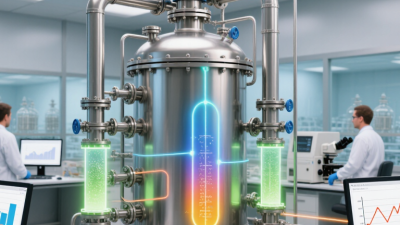
In 2026, biopharmaceutical manufacturing technology is moving from promising demonstrations toward measurable performance on the production floor. Manufacturers are connecting process analytical technology, automation, and real-time data systems to improve batch consistency. A sensor may track dissolved oxygen, pH, or cell density every few seconds. That information can support faster decisions before a small variation becomes a costly deviation.

Continuous manufacturing is gaining attention, especially for products requiring flexible capacity and tighter process control. Modular facilities may also shorten deployment timelines and reduce construction waste. Digital twins, artificial intelligence, and advanced analytics could help engineers test process changes before adjusting live equipment. However, these tools are not automatically reliable. Poor data quality, incomplete validation, and weak operator training can create confident but incorrect recommendations.

The strongest 2026 strategies will balance innovation with evidence. Manufacturers must connect new platforms to quality risk management, reproducible documentation, and practical workforce experience. Sustainability will matter too, from lower water consumption to more efficient single-use systems, although their waste footprint deserves honest examination. No technology solves every manufacturing challenge. Some claims remain ahead of industrial proof. This article examines the leading trends, their operational value, and the limitations that technical teams should question before investing.

2026 Top Biopharmaceutical Manufacturing Technology Trends?

AI-Driven Biomanufacturing: Targeting 20–30% Faster Process Development

2026 Top Biopharmaceutical Manufacturing Technology Trends: AI-Driven Biomanufacturing

AI-driven biomanufacturing is reshaping how development teams plan, test, and refine production processes.

With well-structured historical data, machine-learning models can identify promising culture conditions before extensive laboratory work begins. They can compare temperature, pH, feeding rates, and harvest timing within minutes.

This approach may deliver 20–30% faster process development when data quality remains consistent.

The Practical Gains in Daily Decisions

The practical gains appear in daily decisions. A model might flag a declining dissolved-oxygen trend during a 2,000-liter run. Engineers can then adjust feeding strategies before product quality changes. Digital process models also support faster scale-up by revealing patterns between laboratory and manufacturing batches. Experienced specialists still review every recommendation, especially when biological variability affects the result.

AI Is Not a Shortcut

AI is not a shortcut around scientific judgment. Poorly labeled records can produce confident but unreliable predictions. Models may also miss rare failures because those events seldom appear in training data.

Validation and Decision Limits

That weakness requires careful validation, audit trails, and clear decision limits. A useful system should explain why it suggests a change, not merely provide a score.

The 20–30% target is realistic in selected workflows, but not universal. Some teams may need to slow down before they can safely move faster.

Continuous Bioprocessing: Cutting Facility Footprints by Up to 50%

In 2026, continuous bioprocessing is moving from pilot discussions into practical facility planning. Instead of filling large vessels in separate batches, production can flow through connected steps with smaller equipment. This approach may cut facility footprints by up to 50%, depending on process scale, product requirements, and site design. The reduction comes from shorter hold times, fewer storage tanks, and less duplicate equipment.

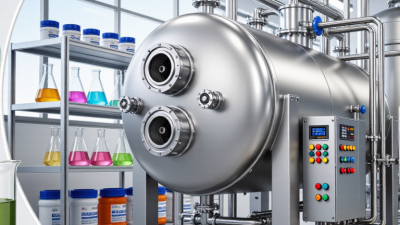
The physical difference is clear. A smaller stainless-steel vessel can replace several large intermediate tanks. Sensors track temperature, pressure, pH, and cell growth during production.

Automated sampling helps operators detect drift before it affects an entire batch. Engineers must still confirm residence-time distribution, cleaning procedures, process control, and material traceability. These details decide whether a compact layout performs reliably or only looks efficient on paper.

It is not a universal shortcut. Continuous systems require stable raw materials, strong data practices, and highly trained teams. A blockage can affect connected operations faster than in a traditional batch process. That risk deserves honest testing. Facility planners should compare utility demand, maintenance access, operator movement, and emergency handling before removing floor space. A smaller building is useful only when the process remains safe, controllable, and easy to inspect. Some projects may discover that hybrid production offers a more realistic path.

Single-Use Systems: Supporting 80%+ of New Biologics Facilities

2026 Top Biopharmaceutical Manufacturing Technology Trends?

Single-use systems are becoming central to new biologics facilities. Industry estimates suggest they support more than 80% of newly designed facilities, especially for early commercial production. BioPlan Associates’ 2024 industry report identifies single-use bioreactors, bags, and flow paths as leading investments across modern bioprocessing operations.

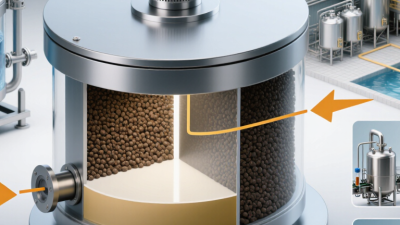
The reasons are practical. Disposable assemblies reduce cleaning validation, water demand, and changeover time. They also help facilities move from a small clinical batch to multiple products with fewer fixed tanks. Grand View Research projects strong double-digit growth for the single-use bioprocessing market through 2030. That growth reflects demand for flexible capacity, not only equipment replacement.

The details still matter. Operators must check extractables, leachables, film integrity, sensor accuracy, and supplier continuity. A failed bag can interrupt an entire campaign. That risk is easy to underestimate. ISPE guidance and recent industry surveys also emphasize stronger qualification, closed processing, and digital monitoring. Single-use technology is not automatically simpler; it shifts complexity toward materials, logistics, and connection control. Some facilities may need hybrid systems, especially when handling high-volume or highly viscous products. The 80% figure is useful as a planning signal, but it should not replace site-specific evidence, validated process data, or experienced engineering judgment.

Automation and Robotics: Reducing Manual Interventions by Over 30%

Automation and Robotics: Reducing Manual Interventions by Over 30%

In biopharmaceutical manufacturing, a 30% reduction in manual interventions is becoming a practical engineering target. Robots can transfer sterile containers, load isolators, and support automated visual inspection. Each avoided glove-port opening reduces operator exposure, process disruption, and contamination risk. The detail matters: intervention logs should record time, location, cause, and recovery action.

The International Federation of Robotics reported 541,302 industrial robots were installed worldwide in 2023, a 10% annual increase. The World Economic Forum’s Future of Jobs Report 2025 found that 58% of employers expect robotics and automation to transform operations by 2030. These figures are cross-industry, not direct proof for biopharmaceutical plants. That limitation matters.

From line-walk experience, the strongest results usually come from repetitive transfer steps, not dramatic fully autonomous factories. A robotic system can move trays between a filling zone and inspection area while electronic batch records capture each handoff. Human review remains essential for alarms, deviations, and unusual container defects. Automation is not automatically reliable. Poorly defined recipes can simply create faster errors, while weak cleaning procedures may increase downtime. Engineers should compare intervention rates before and after deployment, then challenge the result during media fills and qualification runs. The 30% figure should be verified, not advertised.

Cell and Gene Therapy Manufacturing: Scaling Beyond 100 Approved Products

Cell and gene therapy manufacturing is entering a less forgiving phase: scale. The Alliance for Regenerative Medicine’s 2025 industry review reports more than 100 approved therapies worldwide. Its 2024 report also tracked over 4,000 active clinical trials. These figures point toward sustained demand for reliable capacity. Approval, however, does not guarantee stable supply. Each batch may require precise vector potency, viable cell counts, sterility testing, and cryogenic control. Small deviations can create costly rework.

Manufacturers scaling beyond 100 products need closed processing, automated sampling, and stronger digital batch records. The U.S. Food and Drug Administration’s 2024 product listings show more than 30 approved cellular and gene therapies domestically. Global growth therefore depends on repeatable processes, not only scientific breakthroughs. BioPlan Associates’ 2024 biopharmaceutical manufacturing report also highlights continuing pressure on workforce skills, facility capacity, and process consistency. Those constraints are visible on the factory floor.

A practical facility needs flexible suites, validated cryogenic storage, and rapid release testing. It also needs operators who understand both biology and engineering. Automation can reduce manual variation, but it cannot repair weak process design. This remains an uncomfortable gap. Many platforms still scale by adding labor, not by redesigning workflows. That approach may work temporarily, but it becomes fragile when patient demand rises. Better comparability studies, clearer critical-quality attributes, and earlier technology-transfer planning should become routine. Some assumptions will fail. Teams must measure them honestly.

2026 Top Biopharmaceutical Manufacturing Technology Trends? - Cell and Gene Therapy Manufacturing: Scaling Beyond 100 Approved Products

Evidence-based manufacturing priorities for expanding cell and gene therapy production capacity, quality, and supply-chain resilience.

Technology Trend Manufacturing Dimension Verified Data Point Operational Implication 2026 Scale-Up Priority Reference Basis
Global product expansion Commercial and regulatory capacity More than 100 cell and gene therapy products have received regulatory approval globally, according to industry tracking through 2024. Manufacturing networks must support more products, indications, dosage forms, and release specifications without compromising comparability. Design flexible facilities, standardized documentation, and platform-based process development. Global regulatory and industry reports
Closed and automated processing Contamination control and labor efficiency Closed systems reduce direct operator intervention and can lower exposure to open-processing risks; they do not eliminate the need for validated aseptic controls. Automation improves process repeatability, electronic batch records, and operator-to-operator consistency. Prioritize robotic handling, automated cell counting, digital recipes, and equipment connectivity. EU GMP Annex 1; FDA aseptic processing guidance
Single-use manufacturing Facility flexibility and turnaround time Single-use assemblies avoid routine product-contact cleaning and cleaning validation between batches, although extractables, leachables, integrity, and supply continuity must be assessed. Facilities can be reconfigured more quickly for multi-product operations and smaller production campaigns. Use standardized assemblies and dual-source critical disposable components. BioPhorum and regulatory single-use guidance
Viral-vector process intensification Yield, purity, and scale Systemic adeno-associated virus programs commonly evaluate doses in the approximate range of 1012–1014 vector genomes per kilogram, creating substantial demand for high-yield and impurity-controlled processes. Upstream productivity and downstream recovery directly affect batch size, cost, and facility throughput. Improve cell-culture productivity, capsid or vector characterization, purification recovery, and aggregate control. Published clinical manufacturing literature; regulatory reviews
Rapid microbiological methods Batch-release speed The traditional compendial sterility test is commonly incubated for 14 days; alternative methods require validation and regulatory acceptance before replacing or supplementing it. Faster detection can reduce product hold time and improve scheduling for short-shelf-life therapies. Validate rapid microbial, mycoplasma, and endotoxin methods within the product control strategy. USP <71>; FDA alternative microbiological methods guidance
Product-specific potency testing Quality control and comparability There is no universal potency assay applicable to all cell and gene therapies; potency must reflect the product’s biological mechanism and clinically relevant activity. Assay development can become a critical path for process changes, technology transfer, and regulatory submissions. Build orthogonal potency, identity, purity, and functional assays early in development. FDA potency guidance for cellular and gene therapy products
Cryogenic logistics Storage and distribution stability Many cryopreserved cellular products are stored at or below approximately −150°C in vapor-phase liquid nitrogen systems, depending on the validated product and container configuration. Temperature excursions, container integrity, monitoring, and chain-of-custody controls become central release and distribution risks. Expand qualified cryogenic storage, continuous monitoring, alarm response, and validated shipping lanes. USP <1044>; PDA technical guidance
Chain of identity and chain of custody Patient-specific traceability Autologous manufacturing requires control of identity and custody from collection through processing, labeling, storage, transport, and administration. Manual records and disconnected systems increase the risk of labeling errors, delays, and reconciliation failures. Deploy barcode or RFID controls, electronic workflow management, and end-to-end exception tracking. 21 CFR Part 1271; FDA cellular therapy guidance
Distributed and regional manufacturing Patient access and network resilience Short shelf life and patient-specific production can favor regional or point-of-care models, but each site must maintain equivalent process controls, training, validation, and release oversight. Regional capacity may reduce transportation time while increasing technology-transfer and network-governance complexity. Standardize equipment, recipes, raw materials, analytics, and digital oversight across sites. FDA and EMA advanced therapy manufacturing frameworks
Process analytical technology and real-time data Process control and continuous improvement Real-time or near-real-time monitoring can support earlier detection of process drift, but analytical methods must be qualified for intended use and linked to predefined control strategies. Integrated data improves deviation investigation, trend analysis, and comparability assessment. Connect sensors, manufacturing execution systems, laboratory systems, and validated analytics platforms. ICH Q8, Q9, Q10, and Q14 principles
Modular facility design Capacity expansion and capital efficiency Modular cleanroom and utility designs can shorten construction or expansion timelines, but qualification, environmental monitoring, and segregation requirements remain mandatory. A modular footprint supports staged investment and product-mix changes more effectively than a fixed single-product layout. Plan scalable utilities, adaptable cleanroom suites, and segregated workflows for viral vectors and living cells. EU GMP Annex 1; ISO 14644 series

Data note: Values are presented as public regulatory, pharmacopeial, or peer-reviewed benchmarks. Actual process limits, storage conditions, release timelines, and manufacturing scales must be established through product-specific validation and regulatory agreement.

Go to Top