7 Best Gas Brick Ovens for Commercial Kitchens
A busy commercial kitchen asks more of an oven than high heat. It must recover quickly between orders, hold steady temperatures, and fit the pace of the line. A Gas Brick Oven can produce crisp crusts, charred edges, and the familiar flavor many guests expect. Yet the right model depends on menu, order volume, available space, fuel setup, and staff experience. Small differences matter. Door width, deck area, insulation, burner layout, and controls all shape daily use. An impressive oven can still frustrate cooks if loading feels awkward or heat zones are uneven. No oven suits everyone.
This guide compares seven commercial models through the details that affect service: usable deck area, heat control, construction, cleaning access, installation needs, and available support. It considers how each oven may suit a different operation, from a neighborhood pizzeria to a high-volume restaurant. Published specifications offer a useful starting point, but they cannot show every kitchen’s ventilation limits, workflow, or preferred baking style. Check clearances, gas requirements, installation guidance, and warranty terms with the manufacturer or a qualified installer before choosing. More capacity is not always better. A larger chamber can take up valuable floor space and may be harder for a small team to manage consistently. Prices, features, and availability can change, so confirm current details rather than relying on a product list alone. The strongest choice is the one that matches your menu and crew—not simply the oven with the boldest claims.
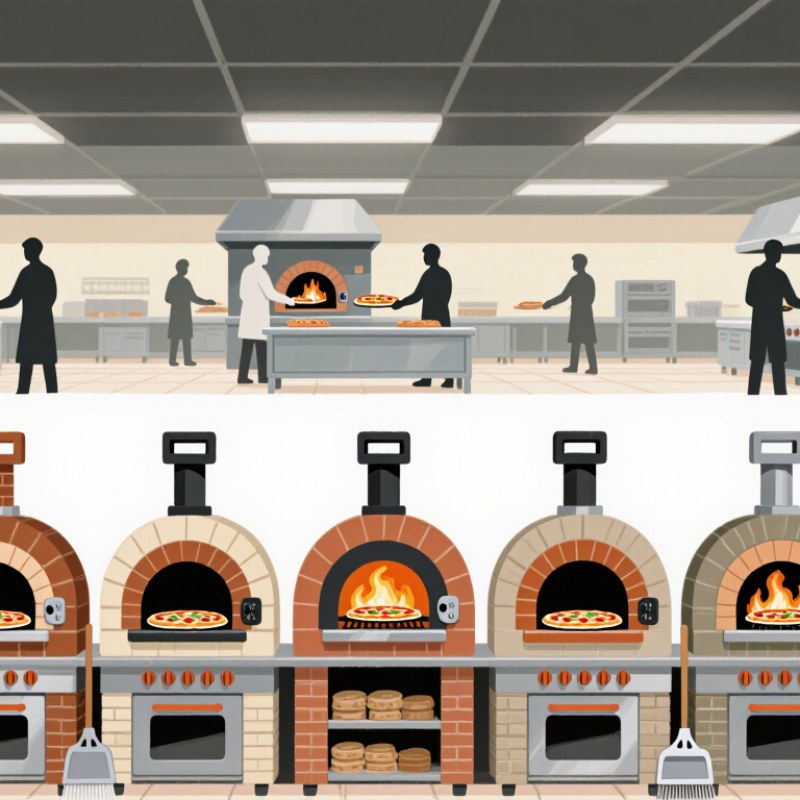
How Gas-Fired Brick Ovens Work in Commercial Kitchens
A gas-fired brick oven uses a burner to heat the cooking chamber and its heavy masonry surfaces. The flame warms the dome, while hot gases move across the oven and exit through the flue. The brick floor stores heat and transfers it directly to dough. The dome sends radiant heat down onto toppings. These three heat paths work together, but not always evenly. A pizza near the flame may brown faster than one at the far side.
In a busy kitchen, staff manage burner output, airflow, and food placement to keep cooking consistent. A surface thermometer can show whether the floor has recovered after several pizzas. Cooks also watch the crust, cheese, and exposed edges; small visual changes matter. Keep the oven door position and flue setting consistent where the oven design allows it. It takes practice. A thick brick floor holds heat well, but it can take time to recover after a rush. That timing is easy to underestimate. Even experienced teams may need to rotate food more often during peak service, especially when the oven is heavily loaded. Regular cleaning and equipment checks help maintain reliable operation.
Key Features to Compare When Choosing a Commercial Oven
When comparing commercial gas brick ovens, start with usable cooking-floor area, not the exterior dimensions. A crowded oven slows loading and makes turning pizzas awkward. Check the floor material, dome insulation, and burner position; these affect heat retention and how evenly food cooks.
Heat matters. Ask for temperature ranges and recovery times under a realistic service load, not just an advertised maximum.
Tips: Picture a busy shift. Can staff reach the rear of the oven safely? Does the opening fit your usual pans or pizza sizes? Measure the doorway and route to the kitchen before delivery. Small details can become expensive surprises.
Also compare ignition controls, flame adjustment, cleaning access, and the time needed to return to temperature after repeated batches. A visible temperature gauge helps, but it may not show hot and cool zones across the cooking floor. If possible, test the oven with your menu and record results at several points. Check ventilation needs, service access, and warranty terms with the supplier; have a qualified professional confirm installation requirements. Some ovens look simple to run, yet need practice to balance flame and floor heat. That part is easy to underestimate.
Seven Gas Brick Ovens for Different Kitchen Needs
A compact single-deck gas brick oven suits a café with limited floor space and a focused menu. A wide single deck gives staff more room to turn several pizzas without crowding. Small kitchens need restraint. A double-deck model increases output, but only when the team can load both chambers steadily. A rotating-floor oven helps reduce uneven browning during busy services. Its moving parts also need regular attention. A modular oven lets operators add capacity later, though the extra sections require careful planning.
For a low-ceiling kitchen, a lower-profile oven may fit more comfortably beneath existing extraction equipment. A high-temperature model suits thin-crust pizzas that need a fast bake and crisp edges. A larger, lower-temperature brick oven can better support bread, roasted vegetables, or mixed menus. These are different tools, not automatic upgrades. Check chamber dimensions against the actual pans and pizza sizes, then consider how quickly the floor recovers heat between loads. Gas supply, ventilation, and installation should be assessed by qualified professionals. On paper, a high-capacity oven looks efficient; in practice, a crowded landing area can slow the whole line. A little extra space around the oven may matter more than another deck.
7 Best Gas Brick Ovens for Commercial Kitchens - Seven Gas Brick Ovens for Different Kitchen Needs
A comparison of common commercial gas-fired brick oven configurations. Capacity and operating temperatures are indicative ranges; actual performance depends on chamber dimensions, installation, menu, and operating conditions.
| Oven configuration | Best suited to | Typical baking surface | Approx. 12-inch pizzas per batch | Typical operating range | Key consideration |
| Compact single-deck oven | Small cafés, bars, and kitchens with limited floor space | About 0.5–0.8 m² | 2–4 | About 300–450°C (570–840°F) | Check ventilation, clearances, and whether the opening suits the intended products. |
| Standard single-deck oven | Independent pizzerias and restaurants with steady pizza service | About 0.9–1.3 m² | 4–6 | About 300–450°C (570–840°F) | A balanced option when one baking chamber can meet peak demand. |
| Large single-deck oven | High-volume restaurants with enough space for a wide chamber | About 1.4–2.0 m² | 6–10 | About 300–450°C (570–840°F) | Confirm that the larger footprint and gas demand are supported by the site. |
| Double-deck oven | Busy kitchens that need additional capacity without a wider oven line | About 1.0–2.0 m² combined | 4–10 combined, depending on deck size | About 300–450°C (570–840°F) | Separate chambers can support different temperatures or menu items. |
| Rotating-deck oven | High-throughput service where consistent baking and reduced manual turning matter | Typically about 1.0–1.8 m² of usable deck area | Varies by deck diameter and layout | About 300–450°C (570–840°F) | Moving parts add maintenance needs; verify service access and controls. |
| Masonry-dome oven | Restaurants seeking a traditional live-fire-style presentation and retained heat | Varies widely by dome diameter | Usually 2–8, depending on the cooking floor | Often operated around 300–450°C (570–840°F) for pizza | Can be heavy and slow to heat; plan structural support and installation carefully. |
| Multi-purpose brick oven | Menus combining pizza, flatbreads, roasted dishes, and other oven-baked foods | About 0.8–1.5 m² | About 3–7, depending on chamber layout | Broadly about 150–450°C (300–840°F) | Check temperature-control range and heat recovery for the full menu. |
Gas supply may be natural gas or LPG, depending on the oven configuration. Confirm local fuel availability, ventilation, fire-safety requirements, and installation specifications with qualified professionals before purchase.
How to Match Oven Capacity to Menu and Service Volume
Match oven capacity to the menu’s busiest service, not its average day. A compact menu of 12-inch pizzas may turn quickly on a smaller hearth, while larger pies or varied dishes need more floor space and flexible temperature zones. Count the portions you expect to bake during your busiest 30 minutes. Then compare that demand with the oven’s usable hearth area and its recovery time between loads. Published output figures can depend on ideal conditions. Treat them as a starting point.
Picture a 40-seat restaurant with a Friday rush. If orders arrive in waves, an oven that holds several pies may help more than one with a high hourly rating but a crowded hearth. Measure actual pies, leave room for turning them, and consider whether the menu needs space for pans or bread. Staff workflow matters, too. A large oven can become a bottleneck if one cook must load, rotate, and unload every item. Test a realistic bake cycle with your dough and service setup before deciding. It may reveal an awkward fit. Capacity should support the menu without forcing unnecessary heat, labor, or floor space.
Installation, Ventilation, and Routine Maintenance Essentials
Before delivery, confirm the oven’s weight, required clearances, and floor capacity with the building team. A loaded commercial kitchen floor may need more support than it appears to. Have qualified professionals complete the gas connection and verify that the supply matches the oven specifications. Measure the exhaust hood against the oven opening, not just its outer dimensions. The hood, ductwork, and make-up air should work together to capture heat and smoke without pulling flames off course. Small gaps matter. Keep combustible materials clear, and check ventilation and fire-protection requirements with the relevant local authorities before installation. A rushed layout can make daily service uncomfortable, even when the oven heats well.
Set a routine for cleaning and inspection. Once the oven is cool and safely shut off, remove loose ash and food debris with suitable tools. Check burners for blockage and look for unusual flame color, soot, or gas odors; stop use and call a qualified technician if anything seems wrong. Inspect the flue and hood for grease buildup, and follow the equipment manual for cleaning intervals. Examine the cooking floor and dome for widening cracks. Minor surface changes may be normal, but I would not guess when a crack grows or heat distribution shifts. Keep a simple dated maintenance log. It can reveal a pattern before service slows down.
Commercial Gas Brick Ovens: Routine Maintenance Intervals
Regular cleaning and inspection help support safe, reliable operation. Installation must follow the oven manufacturer’s requirements for gas supply, clearances, and ventilation.
Intervals are illustrative planning guidance, not universal code requirements. Follow the oven manual and applicable gas, fire, and ventilation regulations; arrange qualified service as required.


