Biotech, pharma, food industries equipment & plants
Choosing the best Handheld Infrared Sensor in 2026 requires more than comparing screen size or advertised temperature range. Field experience shows that a bright display cannot rescue poor calibration, weak thermal sensitivity, or confusing software. A technician may stand beside a vibrating motor, rain-covered pipeline, or crowded electrical cabinet. Small temperature differences can decide whether an inspection is useful.
Market research points to steady demand. MarketsandMarkets projects the global thermal imaging market to grow from about USD 4.5 billion in 2023 to more than USD 8 billion by 2028. Grand View Research also reports strong expansion through industrial maintenance, building inspection, healthcare, and automotive applications. These figures describe thermal imaging broadly, not handheld sensors alone. That distinction matters. Report estimates are not perfectly consistent.
Dr. Michael Vollmer, a recognized thermography researcher and co-author of Infrared Thermal Imaging, states, “Temperature measurement is only meaningful when emissivity and reflected radiation are considered.” That principle should guide every 2026 comparison. The strongest device combines reliable calibration, suitable spectral response, low NETD, accurate focus, and practical data export. It should also survive real work, including dust, accidental drops, and long shifts. Standards such as ISO 18434-1 and IEC 62471 offer useful reference points, but compliance does not automatically guarantee excellent field performance. This guide examines the details that manufacturers often place in small print, including accuracy limits, battery behavior, image clarity, software quality, and after-sales support. The best choice may not be the most expensive model. It may be the sensor that produces dependable evidence when conditions become difficult.
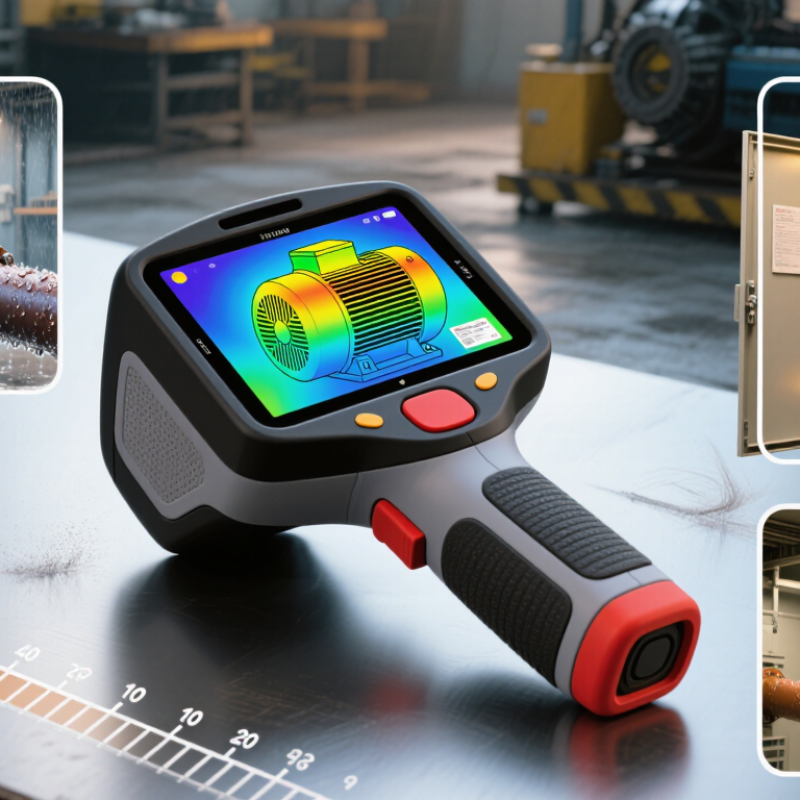
A handheld infrared sensor is a portable device that detects infrared energy from objects, surfaces, or nearby environments. It converts invisible heat radiation into readable information, such as temperature, movement, or surface differences. Unlike ordinary cameras, it responds to thermal patterns rather than visible color. This makes it useful for checking electrical panels, locating insulation gaps, monitoring machinery, and observing warm or cool areas during maintenance.
In practical use, the best handheld infrared sensor should offer stable readings, a clear display, fast response, and dependable calibration. A comfortable grip also matters when inspections last for hours. Experienced technicians usually compare measurement range, accuracy, image clarity, battery life, and environmental protection. However, no sensor is perfect. Shiny metal, airflow, dust, and incorrect distance can distort results. I have found that a careful second measurement often matters more than a higher specification.
Tips: Let the sensor adjust to the surrounding temperature before testing. Keep the lens clean and avoid touching it during measurement. Check unusual readings from another angle. Record the surface condition, distance, and ambient temperature. These small details improve reliability, although field conditions can still produce uncertain results.
What Is the Best Handheld Infrared Sensor in 2026?
How Handheld Infrared Sensors Work
A handheld infrared sensor detects thermal radiation without touching the target. Every object above absolute zero emits infrared energy. The sensor’s optics focus that energy onto a detector, often a microbolometer. The detector changes temperature, resistance, or electrical output. Internal software then converts that signal into a temperature reading or thermal image.
Performance depends on more than resolution. Emissivity, reflected heat, distance, humidity, and viewing angle can change results. A painted steel pipe may read differently from polished metal nearby. According to the International Energy Agency, buildings used about 30% of global final energy consumption in 2022. Reliable thermal inspection can help locate heat loss, overloaded connections, and insulation gaps. However, infrared readings are not automatically accurate. I have seen a cool-looking surface hide heat behind it. That limitation deserves attention.
Tips: Check emissivity before measuring. Keep the lens clean. Let the device stabilize outdoors. Compare readings with a calibrated contact thermometer when possible. NIST guidance emphasizes traceable calibration for dependable measurement systems. Look for suitable spectral range, temperature accuracy, field of view, and thermal sensitivity. MarketsandMarkets’ 2024 analysis also identifies industrial inspection and predictive maintenance as major growth areas for thermal imaging. The best handheld sensor is not always the most expensive. It should match the surface, distance, environment, and user’s skill. Mistakes remain possible. That is why a clear measurement routine matters.
What makes the best handheld infrared sensor in 2026? Not the sharpest screen. Compare measurement quality first: spectral response, temperature range, accuracy, repeatability, and thermal sensitivity, or NETD. Lower NETD can reveal a faint hot spot. Focus and distance still matter.
ASTM E1933-14 (2021) stresses calibration and measurement uncertainty for infrared thermometry. That matters in workshops, where a shiny pipe may reflect a worker’s body heat. Emissivity adjustment, reflected-temperature compensation, and visible-light reference images are practical essentials. Small details matter.
Field usability deserves equal weight.
Look for a stated response time near one second or faster, stable readings after startup, glove-friendly controls, and battery endurance through a full shift. An IP rating, drop resistance, and lanyard point may matter more than extra pixels. Choose models with timestamped data, exportable reports, and traceable calibration certificates.
ISO 18434-1 connects infrared condition monitoring with disciplined inspection methods, not casual scanning. The IEA’s Energy Efficiency 2023 report estimates that industry uses about 37% of global final energy. Early heat-loss detection has real operational value.
Still, that figure does not prove every sensor saves energy. It is easy to overclaim. A neat display never guarantees reliable measurements.
The best handheld infrared sensors in 2026 are not defined by resolution alone. They must deliver repeatable readings in real field conditions. MarketsandMarkets’ 2024 infrared sensor report forecasts annual market growth of roughly 8% through 2028. Grand View Research also identifies industrial monitoring and predictive maintenance as major demand areas. These figures show why portability, accuracy, and data logging now matter together.
For most technicians, a compact thermal imager offers the best balance. Look for a resolution of at least 256 × 192 pixels, thermal sensitivity below 40 mK, and stated accuracy near ±2°C or ±2%. A single-point infrared thermometer remains useful for quick checks. It is lighter and often faster. However, it cannot show a loose electrical connection hiding beside a cooler surface. A bright screen helps outdoors. So does a battery lasting through a full shift.
Calibration matters more than impressive specifications. ISO 18434-1 stresses controlled measurement practices, including emissivity and environmental conditions. Shiny metal can reflect a worker’s face instead of showing its true temperature. I usually place matte black tape on the test area, wait briefly, and compare readings. Even then, airflow and distance can interfere. This is where the “best” choice becomes uncertain. A sensor with excellent laboratory accuracy may perform poorly in rain, dust, or rushed maintenance work. Rugged housing, removable storage, and traceable calibration records deserve equal attention.
The best handheld infrared sensor in 2026 is not automatically the most expensive. Choose it by the surface, distance, and decision you need to make. For electrical panels, motors, pipes, and food equipment, temperature range matters. So does accuracy. A sensor with a narrow measurement range may perform better in real work than a dramatic specification sheet suggests. Consider whether you need simple temperature checks or detailed thermal comparisons.
Emissivity adjustment is essential when measuring metal, glossy paint, or reflective surfaces. Without it, the displayed temperature can look precise but remain misleading. Check the distance-to-spot ratio, especially when inspecting small connectors or crowded circuit areas. A wide target spot can mix hot and cool surfaces. That hides useful detail. Fast response time helps during moving inspections, while a clear backlit screen supports work in dark plant rooms.
Practical handling matters more than many buyers expect. Look for a secure grip, responsive buttons, dependable battery life, and protection against dust or occasional splashes. Data logging can support maintenance records, but only when readings include location, surface type, and operating conditions. A sensor should also offer a traceable calibration process or a clear accuracy statement. No handheld tool is perfect. Even experienced users can misread a reflective surface or measure before equipment reaches a stable load. Test the sensor against a known reference when possible, and question unusual readings instead of trusting the screen immediately.