Biotech, pharma, food industries equipment & plants
Why Choose an Instant Read Thermometer for Global Sourcing?
Choosing an Instant Read Thermometer is not simply a price comparison. It is a quality decision with practical consequences. A few seconds can separate accurate cooking from an uncertain result. In commercial kitchens, buyers often test probe speed, temperature range, display readability, and calibration stability. They also examine the hinge, button seal, battery compartment, and probe tip. Small details matter.
Food safety expert Dr. Robert L. Gravani, professor emeritus at Cornell University, has emphasized, “A food thermometer is the only way to tell if food is cooked safely.” That principle supports careful sourcing. A reliable Instant Read Thermometer should deliver repeatable readings, not merely impressive specifications. It should perform near steam, sauce, grills, and refrigerated storage. It should also include clear instructions and traceable quality records.
Global sourcing adds another layer of judgment. Suppliers may offer different materials, certifications, packaging formats, and after-sales support. Buyers need sample testing before accepting large orders. Do not trust a brochure alone. Test it.
No thermometer is perfect. Batteries fail. Seals wear. Users make mistakes. That uncomfortable truth deserves attention. A strong supplier explains these risks and provides calibration guidance, inspection reports, and replacement support. Some buyers may focus too heavily on unit cost. I have found that inconsistent readings create greater expense through waste, complaints, and rework. The best choice balances accuracy, durability, compliance documentation, and long-term service. That balance makes an Instant Read Thermometer a dependable sourcing investment.
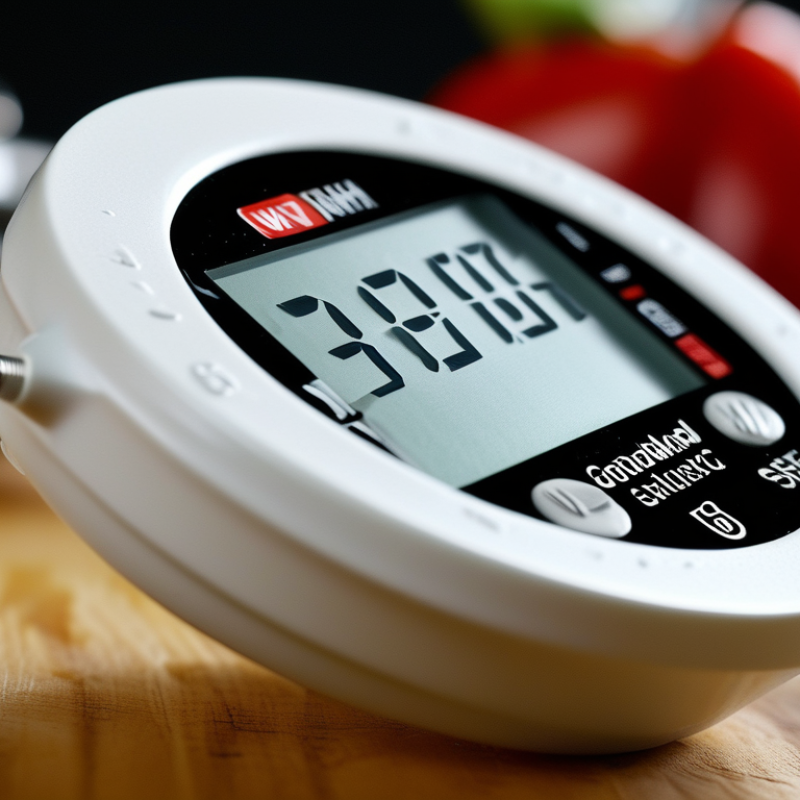
An instant read thermometer is a handheld tool that measures food temperature within seconds. Its probe enters meat, sauces, oil, or baked products, then displays a reading on a digital screen. Unlike a leave-in thermometer, it is designed for quick checks between cooking stages.
That speed matters in kitchens and food production lines. The World Health Organization estimates that contaminated food causes about 600 million illnesses worldwide each year. Temperature control cannot prevent every hazard, but it offers measurable evidence during preparation. The 2022 FDA Food Code recommends temperature devices accurate to ±2°F (±1°C) across common food temperature ranges. Buyers should therefore request accuracy reports, calibration instructions, response-time data, and probe protection details from suppliers.
Look for clear displays, water-resistant construction, and a probe long enough to reach the product center. A reading should stabilize quickly, not merely appear quickly. Calibration is also important; ice-water testing can reveal drift before shipment or routine use. Some specifications look impressive on paper. They may still fail in a wet, busy kitchen. Sourcing teams should compare samples under real conditions, including cold storage, steam, repeated cleaning, and thick foods. I have seen fast readings create false confidence when the probe touched a pan instead of the product. The tool helps, but technique remains part of accuracy.
An instant read thermometer measures temperature through a sensing probe and converts that measurement into a digital reading. Most models use a thermistor, whose electrical resistance changes as temperature changes. The internal circuit detects this change, applies a calibration curve, and displays the result within seconds. Some professional units use thermocouples, which generate a small voltage when two different metals meet.
The probe must contact the material properly. A shallow insertion can measure the surface instead of the center. Cold soup, roasted meat, and heated oil also transfer heat at different speeds. Probe shape, metal thickness, insulation, and sensor placement affect response time. In practical testing, I wait for the numbers to stabilize rather than trusting the first display. That habit prevents avoidable purchasing decisions.
Accuracy depends on more than the sensor. A reliable instrument needs consistent calibration, a readable display, a sealed housing, and a probe that resists corrosion. For global sourcing, buyers should request test records, stated temperature ranges, calibration procedures, and relevant conformity documents. These details help compare suppliers objectively. Still, specifications can look better than real performance. I would test samples in ice water and a controlled hot-water bath before approving a production order. Even then, handling damage, battery weakness, or poor sealing may change results later. Some uncertainty remains.
Why Choose an Instant Read Thermometer for Global Sourcing?
Key Features for Global Sourcing Decisions
An instant read thermometer helps buyers verify performance within seconds. This matters when products move across factories, warehouses, and kitchens. The USDA FSIS advises checking internal temperature, because color alone cannot confirm food safety. Its guidance lists 160°F (71°C) for ground meat and 165°F (74°C) for poultry.
Accuracy should lead the sourcing checklist. The 2022 FDA Food Code recommends temperature devices accurate within ±2°F (±1°C). That tolerance is practical for supplier comparisons. Ask for calibration records and test results across the thermometer’s stated range. ISO/IEC 17025-based calibration adds stronger traceability. It also makes quality discussions less subjective.
Speed matters during repeated checks. A clear display, probe stability, and automatic shutoff reduce handling errors. Water resistance is useful near sinks and chilled storage areas. A narrow probe can measure a small sample without damaging it badly. Small detail, big impact. However, advertised response times may come from controlled laboratory testing. Real kitchens are messier. Buyers should request independent verification, battery data, and samples from different production batches. A low unit price can hide slow readings, weak seals, or inconsistent sensors. That risk deserves attention before a large global order.
Why Choose an Instant Read Thermometer for Global Sourcing?
For international buyers, an instant read thermometer speeds up incoming inspections. A worker can check food, liquid, or processed materials within seconds. The clear display helps teams read results in bright warehouses or busy kitchens. Fast readings reduce waiting time during supplier audits and quality checks. Buyers can compare samples against agreed temperature ranges before accepting a shipment. This supports more consistent decisions across different countries and time zones.
Suppliers also benefit from showing measurable quality controls. A reliable thermometer can support batch testing, production checks, and final inspections. Suppliers should maintain calibration records and provide test reports when requested. These documents strengthen trust during remote purchasing discussions. Still, accuracy depends on correct use, battery condition, and sensor care. A perfect reading is not guaranteed. In practice, teams sometimes rush measurements or place the probe incorrectly. That small error can affect an entire inspection report.
Tips: Request a sample before large orders. Confirm Celsius and Fahrenheit settings. Check response time, probe material, display size, and operating range. Ask how calibration is verified. Review packaging for moisture protection and safe transport. Buyers should also confirm destination requirements before shipping. Suppliers can include a simple testing guide with each batch. Keep records. They help resolve quality questions later.
Benefits for International Buyers and Suppliers
Instant-read thermometers help buyers and suppliers verify critical food-temperature benchmarks quickly and consistently during production, receiving, quality inspections, and shipment preparation. Using shared temperature targets can reduce interpretation differences across international supply chains.
Reference: U.S. FDA Food Code 2022. Temperatures are shown in °F; the chart tooltip also displays the Celsius equivalent.
Why Choose an Instant Read Thermometer for Global Sourcing?
In sourcing projects, quality begins with repeatable measurements, not attractive packaging. An instant-read thermometer should provide stable readings within its stated accuracy range. Check response time, probe construction, display clarity, and resistance to moisture. Ask for calibration records from an independent laboratory when practical. Test several samples at low, medium, and high temperatures. Small differences can matter.
Compliance depends on the destination market and product application. Request material declarations, safety test reports, labeling details, and traceability records before placing a large order. Food-contact components may require specific documentation, while products containing batteries may need additional transport and recycling information. Confirm whether the supplier can support local language instructions. Documents must match the actual production model.
Cost evaluation should include more than the unit quotation. Compare calibration, packaging, shipping, inspection, spare probes, battery replacement, and expected failure rates. A cheaper model may create returns if readings drift after repeated use. Conversely, extra features may add cost without improving the intended application. In procurement reviews, I have seen specifications copied without real testing. That is a weak habit. A pilot order, clear acceptance limits, and sample-based inspection provide better evidence. Still, no test removes every uncertainty. Supplier performance should be reviewed after delivery, not only before payment.
| Evaluation Dimension | Key Specification | Recommended Sourcing Benchmark | Verification Method | Typical Cost Impact | Global Sourcing Consideration |
|---|---|---|---|---|---|
| Measurement Accuracy | Temperature deviation across the product's stated operating range. | Target accuracy: ±0.5°C from 0°C to 100°C for general food-service use. | Compare readings against a calibrated reference thermometer at ice-point and boiling-point checks. Request a calibration report for production samples. | Higher cost when tighter tolerances require better sensors and factory calibration. | Accuracy claims should identify the temperature range and test conditions; avoid evaluating accuracy at only one temperature. |
| Response Time | Time required for the display to reach a stable reading after probe insertion. | Approximately 2–5 seconds for a practical instant-read design. | Test at the same immersion depth and temperature change for every sample. Record the time until the reading changes by no more than 0.1°C over 2 seconds. | Fast response may increase sensor, firmware, and assembly costs. | Response time is useful only when the test procedure is consistent; probe placement strongly affects results. |
| Measurement Range | Lowest and highest temperatures the thermometer can measure safely and accurately. | At least −50°C to 200°C for broad food, beverage, laboratory, and cold-chain applications. | Verify the operating range in the technical specification and test representative points near the lower, middle, and upper limits. | Wider ranges can require specialized sensors, insulation, and more robust probe materials. | Do not confuse display range with the certified accuracy range. |
| Probe Material | Material used for the food-contact or measurement probe. | Food-contact probe made from corrosion-resistant stainless steel, commonly specified as 304 or 316 grade. | Review material declarations, supplier documentation, corrosion resistance, weld quality, and surface finish. Confirm food-contact suitability for the destination market. | 316 stainless steel and higher-grade finishes generally cost more than standard stainless steel options. | Material compliance must be assessed against the intended application and destination-market requirements. |
| Ingress Protection | Resistance of the enclosure to dust and water exposure. | IP65 is a practical minimum for splash-resistant food-service applications; IP67 is preferable where temporary immersion is expected. | Request an enclosure test report from an accredited laboratory or perform testing to the applicable IEC 60529 method. | Sealed buttons, gaskets, and ultrasonic welding increase manufacturing cost but reduce failure risk. | IP ratings apply to defined test conditions and do not automatically prove suitability for high-pressure washing or dishwashers. |
| Display and Usability | Readability, unit selection, hold function, auto-off, and low-battery indication. | Clear digital display, °C/°F switching, data hold, low-battery warning, and auto-off after approximately 5–15 minutes. | Run usability checks with gloved users, low-light conditions, wet hands, and the intended operating distance. | Larger displays, backlighting, and additional functions increase component and battery consumption costs. | Use multilingual packaging and instructions when selling across several markets. |
| Calibration Capability | Ability to verify, adjust, and document measurement performance. | Supplier should provide a documented calibration process and a traceable calibration option for commercial buyers. | Review calibration procedures, reference equipment records, acceptance limits, and sample calibration certificates. | Individual calibration certificates and adjustment before shipment add labor and documentation costs. | Calibration documentation can be more important than a low unit price for regulated food, healthcare, or laboratory users. |
| Electrical Safety | Safety of the battery-powered electronic assembly during normal use and foreseeable misuse. | Use compliant low-voltage design, protected battery contacts, secure battery retention, and suitable insulation. | Review applicable electrical safety test reports, battery specifications, polarity protection, and abnormal-operation test results. | Safety testing, improved insulation, and certified components add development and testing expenses. | Required documentation varies by product design, battery type, and destination market. |
| EMC Performance | Resistance to electromagnetic interference and control of emissions. | Test the finished product against the applicable electromagnetic compatibility requirements for each target market. | Request a report covering emissions and immunity tests on the final production configuration, not only on an engineering sample. | Testing and redesign costs may arise if the display, microcontroller, or sensor circuit creates interference. | Changing the battery, display, enclosure, or PCB after testing may require an engineering review or partial retest. |
| Chemical and Material Compliance | Restrictions on hazardous substances and substances of concern in electronic and plastic components. | Maintain documentation supporting applicable RoHS, REACH, packaging, and destination-market chemical requirements. | Collect supplier declarations, material composition data, and risk-based laboratory test reports for plastics, cables, coatings, and solder. | Compliant materials and laboratory screening may increase the landed cost but reduce customs and market-access risk. | Requirements depend on the importing country and whether the product is sold as consumer, professional, or food-contact equipment. |
| Food-Contact Suitability | Safety of materials that may contact food during normal use. | Probe materials and coatings should be supported by documentation appropriate to the destination market and intended food-contact conditions. | Review supplier declarations, migration-test evidence where applicable, and cleaning-use instructions. | Special coatings, polished surfaces, and additional migration testing can raise product cost. | Food-contact compliance is not universal; confirm the exact market, food type, contact time, and temperature conditions. |
| Battery and Shipping | Battery chemistry, replacement method, transport classification, and storage life. | Use commonly available replaceable batteries where suitable; provide clear polarity, replacement, and disposal instructions. | Check battery safety data, packaging configuration, leakage protection, shelf-life information, and applicable air-transport documentation. | Lithium batteries, special packaging, and transport documentation may increase freight and compliance costs. | Battery selection can affect customs declarations, air freight procedures, retailer requirements, and end-user maintenance. |
| Durability and Service Life | Resistance to drops, repeated probe insertion, cleaning, temperature cycling, and button wear. | Define a written test plan, such as repeated button operation, controlled drop testing, and cleaning-cycle testing appropriate to the use case. | Perform reliability testing on pre-production and production samples; inspect seals, probe joints, display integrity, and battery contacts. | Reinforced housings, strain relief, sealed switches, and stronger probe joints increase unit cost. | Durability should be evaluated using the actual cleaning chemicals, handling conditions, and operating temperatures expected in the market. |
| Order Quantity and Tooling | Minimum order quantity, tooling requirements, packaging customization, and production lead time. | For standard designs, request quotations at several quantities and separate one-time tooling or artwork charges from unit pricing. | Compare at least three volume scenarios and include tooling amortization, inspection, packaging, freight, duties, and payment terms. | Higher volume usually lowers unit cost, while custom molds, colors, packaging, and firmware increase initial investment. | Choose a standard platform for market testing and reserve customization for proven demand. |
| Landed Cost | Total cost after manufacturing, inspection, packaging, freight, duties, and compliance-related expenses. | Evaluate total landed cost rather than factory price alone; compare identical specifications and delivery terms. | Build a cost model using a consistent Incoterm, shipment mode, order quantity, destination, inspection level, and warranty allowance. | A low purchase price can become more expensive when failure rates, returns, retesting, or customs delays are included. | Use a total-cost scorecard to balance price, quality, compliance evidence, lead time, and after-sales risk. |
| Quality Control Plan | Controls applied during incoming inspection, production, and final shipment. | Specify critical-to-quality limits for accuracy, response time, display operation, sealing, probe finish, packaging, and labeling. | Use approved samples, first-article inspection, in-process checks, final random inspection, and retained production records. | Pre-shipment inspection and laboratory testing add direct cost but can reduce returns and non-compliance losses. | Quality requirements should be written into the purchase specification and linked to acceptance criteria. |
| Warranty and Documentation | Warranty duration, defect handling, spare parts, manuals, certificates, and traceability. | Define a written warranty policy, batch or lot traceability, user instructions, cleaning guidance, and certificate retention. | Review sample manuals, packaging labels, corrective-action procedures, replacement policy, and historical defect data where available. | Longer warranties and local replacement stock increase reserve and service costs. | Clear documentation supports customs clearance, customer use, audits, and consistent claims handling across markets. |