Biotech, pharma, food industries equipment & plants
Industrial fermentation solutions convert microorganisms, nutrients, and controlled conditions into valuable products at commercial scale. These solutions support enzymes, organic acids, vaccines, biofuels, food ingredients, and other biobased materials. They combine strain selection, media design, bioreactor engineering, process monitoring, downstream recovery, and quality assurance.
The work begins with biology. A productive microorganism must remain stable during repeated cultivation. Engineers then manage temperature, pH, dissolved oxygen, agitation, foam, and contamination risk. In a stainless-steel fermenter, small sensor changes can affect yield, texture, energy use, and batch consistency. Scale-up is rarely a simple multiplication exercise. Heat transfer and oxygen movement often behave differently in a larger vessel.
Louis Pasteur, a foundational fermentation scientist, famously said, “Chance favors only the prepared mind.” His observation still fits industrial fermentation solutions. Reliable teams prepare through validated experiments, documented procedures, and careful data review. They compare laboratory results with pilot-scale performance before making expensive production decisions.
Yet the field is not perfectly predictable. A strain may perform well in a flask but weaken in a factory tank. A cleaner feedstock may improve purity but increase operating costs. These trade-offs deserve honest discussion. Industrial fermentation solutions should therefore be judged by more than headline yield. Safety, traceability, regulatory compliance, waste reduction, and reproducible quality matter equally.
The strongest approach is practical and evidence-based. It connects microbiology with process control, equipment design, and responsible manufacturing. That connection helps producers reduce avoidable failures while building more flexible and sustainable fermentation platforms.
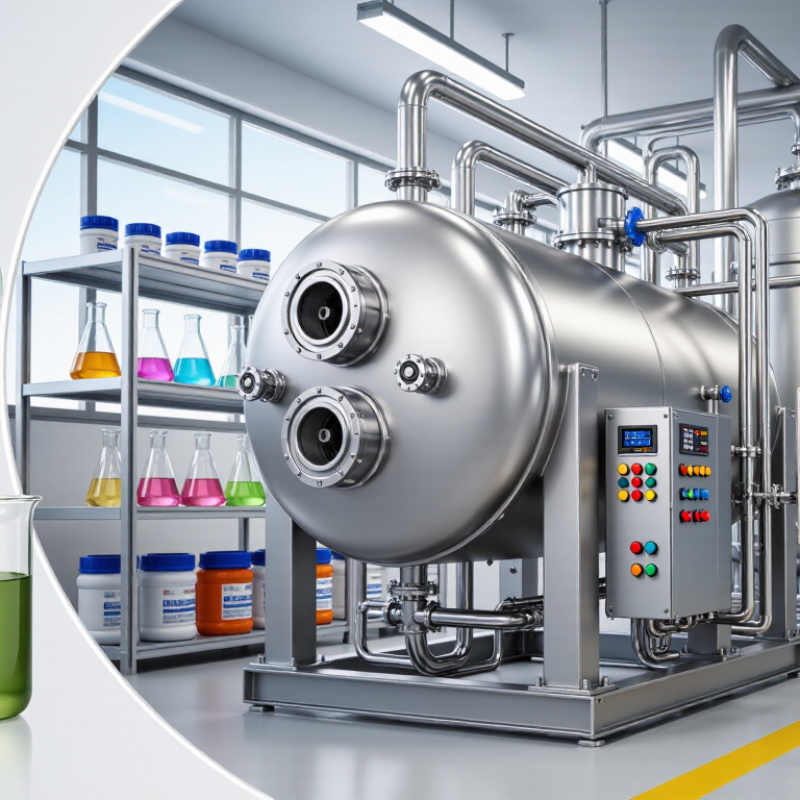
Industrial fermentation solutions are integrated methods for producing useful materials through controlled biological activity. Microorganisms, cells, or enzymes transform selected nutrients into products such as organic acids, enzymes, cultures, and bio-based ingredients. The process occurs in monitored vessels rather than uncontrolled environments.
Their scope extends beyond the fermenter itself. It includes strain selection, raw-material preparation, sterilization, inoculation, agitation, temperature control, oxygen management, and downstream separation. Operators may track pH, dissolved oxygen, pressure, foam, and nutrient consumption in real time. Small changes matter. A slight temperature shift can alter growth, yield, or product consistency.
From practical process work, scale-up is often the difficult stage. A method that performs well in a laboratory vessel may behave differently in a production tank. Mixing time, heat transfer, contamination risk, and cleaning requirements become more demanding. Reliable solutions therefore combine biological knowledge with equipment design, process validation, worker training, and quality controls. The boundary is porous. Fermentation, purification, waste management, and energy use influence one another. Some systems still require repeated adjustment, because living cultures do not always respond predictably. Careful records, controlled trials, and independent testing help distinguish a temporary success from a dependable industrial process.
What Are Industrial Fermentation Solutions? Core Microorganisms and Biological Processes
Industrial fermentation solutions depend on choosing the right microorganism for each biological task. Bacteria often grow quickly and support organic acids, enzymes, and amino acids. Yeasts convert sugars into alcohols, gases, and valuable metabolites. Filamentous fungi can produce complex enzymes, but their tangled structures complicate mixing. It is not always the fastest microbe that performs best.
A 2024 Grand View Research assessment valued the global industrial enzymes market at about USD 7 billion in 2023. This figure reflects strong demand for fermentation-derived biocatalysts across food, agriculture, and manufacturing. The process begins with a controlled culture, then adjusts temperature, pH, oxygen transfer, agitation, and nutrient feeding. Aerobic fermentation may require intense air dispersion. Anaerobic systems need careful oxygen exclusion. Small changes matter. A one-degree shift can alter productivity or contamination risk.
Process engineers also monitor biomass density, sugar consumption, dissolved oxygen, and metabolite formation. The 2023 OECD-FAO Agricultural Outlook projects continued growth in global agricultural production through 2032, increasing interest in converting renewable feedstocks into higher-value products. Yet feedstock quality remains uneven. Seasonal variation, impurities, and poor sterilization can undermine a well-designed process. Laboratory success does not guarantee factory performance. Scale-up still exposes weaknesses in heat removal, foam control, and mixing. Some published projections appear optimistic; actual yields often depend on disciplined monitoring and repeated process refinement.
What Are Industrial Fermentation Solutions?
Key Equipment and Process Control Systems
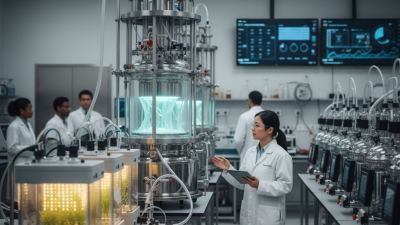
Industrial fermentation solutions combine specialized equipment with carefully managed operating conditions. A typical production line includes a seed vessel, production bioreactor, agitator, sparger, pumps, heat exchanger, and filtration unit. Each component affects cell growth and product consistency. The vessel must maintain sterile boundaries, while the agitator distributes nutrients and oxygen evenly. Small dead zones can create large quality differences.
Process control systems monitor temperature, pH, dissolved oxygen, pressure, foam, and feed rates. Sensors send readings to a control platform, which adjusts valves, pumps, gas flow, or cooling systems. For example, a falling oxygen level may trigger faster agitation or increased airflow. Automated feeding can prevent nutrient shortages, but poor calibration may cause overfeeding. That assumption can fail.
Clean-in-place systems reduce manual handling and support repeatable sanitation cycles. Operators still need to check spray coverage, chemical concentration, rinse quality, and sensor condition. Calibration records, batch data, alarm histories, and maintenance logs support traceability and reliable decisions. Redundant probes can protect a batch when one reading appears abnormal. No system is perfect. Experienced teams review unusual trends instead of trusting automation blindly, especially when foam rises quickly or temperature changes during scale-up.
Industrial fermentation solutions combine bioreactors, agitators, aeration systems, heat-transfer equipment, sensors, and automated control loops. The chart shows representative temperature and pH setpoints commonly used for different fermentation applications.
Values are representative process setpoints rather than universal specifications. Actual operating conditions depend on the microorganism, product, medium, vessel design, and required process-control strategy.
Industrial fermentation solutions combine microbial cultures, controlled vessels, monitoring systems, and downstream recovery. They convert sugars, starches, gases, or agricultural residues into useful products. Operators manage temperature, pH, oxygen, agitation, and contamination risks. Small process changes can alter yield significantly.
Food and feed production remains a major application. Fermentation produces organic acids, amino acids, enzymes, vitamins, flavor compounds, and nutritional ingredients. Enzyme solutions support baking, brewing, animal nutrition, and food processing. The OECD-FAO Agricultural Outlook 2024–2033 identifies biofuel demand as an important driver for agricultural markets, supporting continued investment in ethanol and related fermentation capacity.
Industrial chemicals form another expanding area. Fermentation can produce alcohols, solvents, biopolymers, and platform chemicals with lower dependence on fossil resources. European Bioplastics and nova-Institute reported global bioplastics production capacity of about 2.18 million tonnes in 2023, potentially reaching 7.43 million tonnes by 2028. These figures suggest strong momentum, but capacity is not the same as commercial success.
Performance still depends on feedstock quality, energy use, water treatment, and reliable separation. No plant is perfectly efficient. A laboratory strain may fail at industrial scale. That gap deserves scrutiny. Practical solutions therefore include pilot testing, real-time analytics, sterile design, and lifecycle assessment. Professional operators also examine waste streams, batch consistency, worker safety, and regulatory documentation before expanding production.
What Are Industrial Fermentation Solutions?
Industrial fermentation solutions use microorganisms to produce enzymes, organic acids, proteins, fuels, and other materials. In a working plant, operators control temperature, pH, oxygen, pressure, and feed rates inside stainless-steel vessels. Small changes matter. A minor contamination event can spoil an entire batch and consume days of production time.
The benefits are practical. Fermentation can convert renewable sugars, starches, and selected food residues into higher-value products. The UNEP Food Waste Index Report 2024 estimated that 1.05 billion tonnes of food were wasted in 2022. Some of this material may become useful feedstock, although collection and contamination remain serious barriers. MarketsandMarkets estimated the industrial fermentation market at about 79.3 billion US dollars in 2023, with growth toward 112.6 billion by 2028. These figures suggest strong demand, but forecasts are not guarantees.
Scaling remains difficult. Heat removal, oxygen transfer, foam control, and consistent raw materials become harder in large tanks. Wastewater treatment can also increase operating costs. Future systems will likely combine sensors, automated control, continuous processing, and better microbial engineering. The International Energy Agency has repeatedly highlighted efficiency and resource use as major conditions for expanding bio-based production. Digital monitoring may reduce variation, but it cannot replace laboratory validation. I would also question whether every proposed feedstock is truly sustainable; transport distance and energy consumption can quietly weaken the environmental case.
| Solution Area | Typical Industrial Data | Primary Benefits | Main Challenges | Future Development Direction |
|---|---|---|---|---|
| Batch Fermentation | The vessel is filled, inoculated, operated for a defined period, and harvested once. Production cycles commonly range from several hours to several days, depending on the organism and product. | Simple process control, flexible scheduling, lower risk of long-term contamination, and suitability for multiproduct facilities. | Downtime is required for cleaning and sterilization; productivity may be lower than optimized fed-batch or continuous processes. | More automated recipe management, improved cleaning validation, and data-driven cycle optimization. |
| Fed-Batch Fermentation | Nutrients are added during cultivation to control substrate concentration. It is widely used when excessive substrate levels can inhibit growth or product formation. | High cell density, improved product concentration, better control of overflow metabolism, and broad industrial applicability. | Feed-rate errors can cause oxygen limitation, unwanted by-products, or unstable culture performance. | Model-predictive feeding, soft sensors, real-time biomass estimation, and automated adaptive control. |
| Continuous Fermentation | Fresh medium enters while culture broth leaves at a controlled rate. Operating periods can extend from days to weeks when contamination and culture stability are effectively managed. | Higher equipment utilization, more consistent product quality, reduced turnaround time, and potentially lower labor requirements per unit of output. | Greater sensitivity to contamination, genetic drift, foam, equipment failure, and fluctuations in feed or environmental conditions. | Integrated contamination monitoring, intensified perfusion systems, redundant automation, and advanced process analytical technology. |
| Aerobic Bioreactor Operation | Key control variables include temperature, pH, agitation, aeration, dissolved oxygen, pressure, and foam. Dissolved oxygen is often controlled above a process-specific minimum, commonly around 20% air saturation for aerobic cultures. | Supports production of enzymes, organic acids, amino acids, biomass, and many recombinant products. | Oxygen transfer becomes more difficult as viscosity, cell density, or reactor volume increases; agitation can also raise energy use and shear stress. | Improved impeller design, oxygen-enriched aeration, computational fluid dynamics, and lower-energy mixing systems. |
| Anaerobic Fermentation | Processes operate with little or no oxygen and may require oxygen-free gas handling, sealed vessels, and strict control of oxidation-reduction conditions. | Can reduce aeration energy demand and is suitable for products such as organic acids, solvents, alcohols, and biogas-related intermediates. | Maintaining anaerobic conditions, managing gas composition, and controlling volatile products can complicate scale-up. | Improved gas recycling, membrane-based product recovery, engineered microbial consortia, and integrated carbon utilization. |
| Process Monitoring and Automation | Common online measurements include pH, temperature, dissolved oxygen, pressure, agitation speed, airflow, mass flow, off-gas oxygen, off-gas carbon dioxide, and foam level. | Improves repeatability, reduces manual intervention, supports deviation detection, and strengthens process documentation. | Sensor drift, calibration requirements, data integration problems, cybersecurity risks, and limited availability of reliable online biomass or product sensors. | Digital twins, artificial intelligence, multivariate data analysis, and real-time release decision support. |
| Contamination Control | Industrial systems use sterilization-in-place, cleaning-in-place, aseptic connections, filtered air or gas, hygienic piping, and validated operating procedures. | Protects batch yield, product quality, operator safety, and production continuity. | A single contamination event can cause batch loss, extended downtime, investigation costs, and disposal of process materials. | Rapid microbial detection, closed processing, single-use flow paths where appropriate, and automated hygienic design verification. |
| Scale-Up and Scale-Down | Commercial vessels can range from laboratory and pilot volumes to thousands of liters or more. Scale-up commonly considers oxygen-transfer capacity, mixing time, power input, heat removal, and shear. | Enables transfer of a controlled laboratory process into reliable commercial production. | A process that performs well at small scale may show gradients in oxygen, nutrients, pH, temperature, or carbon dioxide at larger scale. | Mechanistic modeling, representative scale-down reactors, automated experimentation, and high-throughput process development. |
| Energy and Resource Efficiency | Major resource demands typically include agitation, aeration, cooling, steam sterilization, water, raw materials, and downstream separation. | Lower operating cost, reduced environmental impact, improved resilience to utility-price changes, and better sustainability reporting. | Energy-saving changes must not compromise sterility, oxygen transfer, mixing, product quality, or regulatory compliance. | Heat integration, low-energy aeration, renewable utilities, water reuse, concentrated feeds, and life-cycle-based process design. |
| Downstream Processing | Typical steps include cell removal, filtration or centrifugation, concentration, extraction, purification, polishing, formulation, and drying when required. | Converts fermentation broth into a stable product that meets purity, concentration, safety, and performance specifications. | Downstream operations can account for a substantial share of total manufacturing cost, especially for dilute or intracellular products. | Continuous purification, membrane intensification, integrated recovery during fermentation, and lower-solvent separation methods. |
| Future Industrial Outlook | The sector is moving toward more automated, modular, data-rich, flexible, and resource-efficient facilities capable of handling biological and alternative feedstocks. | Shorter development cycles, improved consistency, faster capacity deployment, and broader use of bio-based production. | High capital requirements, workforce skill gaps, regulatory uncertainty for novel processes, supply-chain constraints, and biological variability. | AI-assisted strain and process design, continuous biomanufacturing, modular facilities, carbon-efficient feedstocks, and closed-loop production systems. |
Note: Operating ranges and performance characteristics vary by organism, product, reactor design, raw material, and regulatory requirements. The values and descriptions above represent commonly used industrial engineering practices rather than universal specifications.