Biotech, pharma, food industries equipment & plants
When buyers evaluate a biopharmaceutical partner, promising science is only one part of the decision. They also examine how reliably a product can move from laboratory research to consistent manufacturing. This is where bioprocess development strategies become commercially important. A strong strategy connects cell-line selection, upstream control, downstream purification, analytical testing, and scale-up planning. It also shows how technical decisions may affect timelines, costs, quality, and supply continuity.
In practice, buyers look for evidence rather than attractive presentation slides. They may review batch records, process performance data, deviation histories, and technology-transfer plans. A credible supplier can explain why a buffer was selected, how critical process parameters are monitored, and what happens when a batch performs differently. Small details matter. A poorly defined sampling plan can create major uncertainty during manufacturing. Clear documentation and traceable data help buyers judge operational maturity.
No strategy is flawless. Unexpected variability can appear during scale-up, and laboratory success may not translate smoothly into production. This reality deserves honest discussion. Reliable partners identify technical risks early, describe mitigation options, and acknowledge where further development is necessary. Their approach should also support regulatory expectations, quality oversight, and long-term process improvement. For buyers, the central question is not simply whether a process works today. It is whether the process can remain controlled, transferable, and economically practical as demand increases. That judgment requires technical experience, transparent evidence, and careful reflection on both strengths and unresolved limitations.
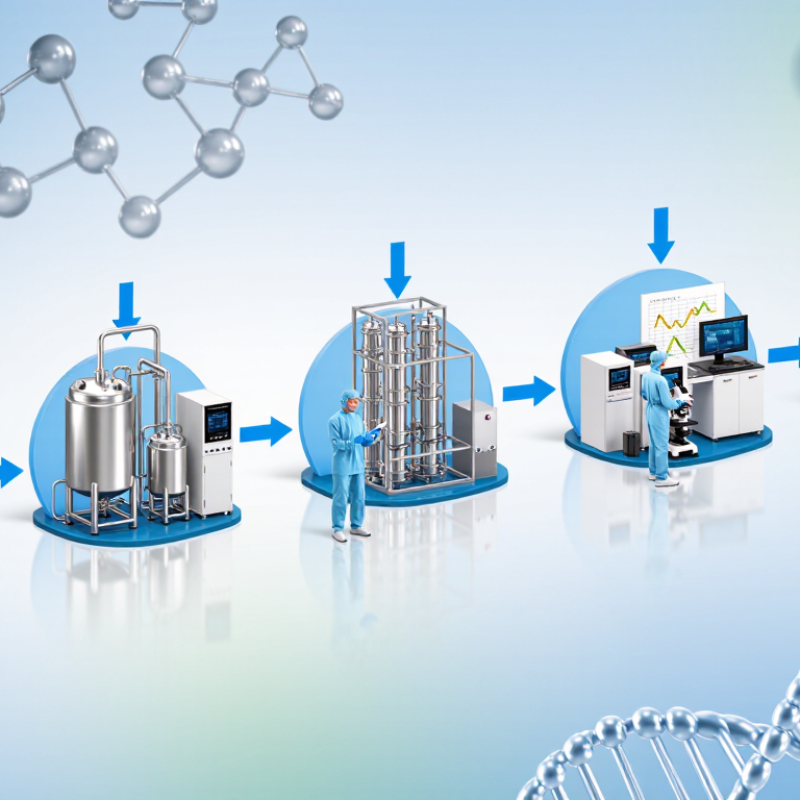
Bioprocess development strategies define how a promising molecule becomes a consistent, manufacturable product. They include product understanding, process design, analytical planning, scale selection, and risk management. A practical strategy begins with the target product profile. It links critical quality attributes to measurable process conditions. For example, temperature, pH, mixing, and feed timing can affect yield and impurity levels. Small laboratory changes may become expensive at production scale. Buyers need evidence, not attractive timelines.
A strong plan maps development work from cell or microorganism selection through upstream and downstream operations. It sets experiments, acceptance criteria, sampling points, and decision gates. Analytical methods must detect identity, purity, potency, and process-related impurities with suitable precision.
Data integrity also matters. Clear records help technical teams compare batches and investigate unexpected results. Scale-up studies should examine oxygen transfer, shear, heat removal, filtration capacity, and hold times. These details often reveal hidden costs before equipment is reserved.
The strategy should also describe technology transfer, operator training, documentation, and ongoing process verification. Buyers can assess whether the development package supports realistic manufacturing conditions. Risk assessments should rank failure modes and identify practical controls. No plan is perfect. Early assumptions may prove wrong. A credible team revises them when data disagree. That honesty is valuable because unresolved uncertainty can affect supply reliability, validation effort, and total ownership cost. Pilot runs, well-designed experiments, and independent review provide stronger confidence than promises alone.
Product quality is shaped long before a buyer receives the final container. A strong bioprocess strategy controls critical inputs, operating ranges, and testing decisions. Small changes in pH can influence cell growth and product structure. Temperature shifts may also affect yield and impurity levels. These details matter.
During process reviews, buyers often examine more than a certificate of analysis. They may request batch history, sampling plans, validation evidence, and deviation records. Clear documentation shows how results were achieved. It also reveals whether quality depends on operator judgment or stable procedures. A reliable process should produce similar results across different batches and production teams.
Consistency builds purchasing confidence. It supports predictable performance during formulation, filling, and downstream testing. Robust strategies use qualified analytical methods and defined acceptance criteria. They also include controls for raw materials, equipment, and storage conditions. However, no process is perfect. An overly narrow operating range may create unnecessary failures. Poorly chosen tests can hide meaningful variation. That deserves review.
Buyers should ask how the process responds to normal change. Can the team explain a deviation without speculation? Are corrective actions verified later? Practical evidence matters more than polished claims. A transparent development record, supported by trained specialists and controlled data, makes product quality easier to trust. Sometimes, the most valuable answer is an honest limitation.
Buyers evaluate bioprocess development strategies through the lens of manufacturing readiness. A promising laboratory result is not enough. They need evidence that the process can move into larger equipment without losing quality, yield, or control. Scale-up studies should explain mixing, oxygen transfer, temperature control, and process timing. Clear batch records and repeatable results also build confidence.
Manufacturing readiness includes more than equipment capacity. Buyers examine analytical methods, raw material controls, operator training, and quality documentation. They may ask how deviations are investigated and how process changes are approved. A realistic technology transfer plan matters too. It should identify critical process parameters and expected risks. This is where plans often fail. Teams sometimes assume that a successful small-scale run will behave similarly at production scale.
Tips: Show scale-up data, not only projections. Include timelines, acceptance criteria, and known limitations. Explain what has been tested and what remains uncertain. Honest gaps are more useful than impressive claims.
An experienced development team also considers supply continuity and facility fit. Can the process use available vessels? Are cleaning procedures practical? Can testing keep pace with production? Buyers value answers supported by traceable records and qualified personnel. Still, no strategy is perfect. Unplanned variability can appear during transfer. Careful monitoring, documented decisions, and disciplined learning help reduce that uncertainty.
Representative mammalian cell-culture scale-up pathway by nominal working volume. Buyers examine whether process parameters, equipment compatibility, and control strategies remain consistent as production moves from laboratory development toward commercial manufacturing.
Why Bioprocess Development Strategies Matter to Buyers?
How Risk, Cost, and Regulatory Needs Influence Purchasing
Bioprocess development now shapes purchasing decisions long before a purchase order. IQVIA Institute’s Global Trends in R&D 2024 reported more than 21,000 medicines in development during 2023. That pipeline increases pressure on buyers to select flexible, scalable platforms. A cheaper system may create costly redesigns when cell growth, filtration, or batch consistency changes. Small deviations matter.
Risk assessment must include the development pathway, not only equipment specifications. The FDA’s CDER 2024 report recorded 50 novel drug approvals. Each approval reflects extensive evidence, validation, and manufacturing control. Buyers therefore examine data integrity, process traceability, supplier qualification, and technology transfer support. Regulatory readiness has become a purchasing requirement. It is not paperwork.
Cost calculations also need a longer view. Disposable assemblies can reduce cleaning requirements and shorten changeover time. However, recurring material costs, waste handling, and supply continuity may weaken the initial savings. In my experience, teams sometimes compare unit prices before mapping the full process. That approach is incomplete. A 2024 BioPlan Associates industry report also highlights continuing investment in single-use manufacturing and process flexibility. Yet flexibility without operator training can create new risks. Buyers should request realistic validation packages, failure scenarios, and delivery histories. They should also question their own assumptions. A technically advanced platform can still fail commercially when documentation arrives late or technicians cannot use it consistently.
| Buyer Dimension | What Buyers Evaluate | Relevant Data or Requirement | Purchasing Influence | Typical Evidence Requested |
|---|---|---|---|---|
| Process robustness | Ability to maintain product quality when raw materials, equipment, operators, or scale change. | Defined critical process parameters and demonstrated operating ranges. | High Reduces batch-failure and supply-continuity risk. |
Development reports, process characterization studies, deviation history, and scale-up results. |
| Regulatory readiness | Whether the development approach supports a clear regulatory filing and inspection-ready documentation. | Alignment with GMP expectations and the principles of ICH Q8, Q9, Q10, and Q11 where applicable. | Very high Regulatory gaps can delay approval or trigger additional studies. |
Traceable development records, risk assessments, control strategy, validation plans, and change-control procedures. |
| Cost of goods | Total manufacturing cost rather than equipment price alone. | Media and raw-material consumption, labor, utilities, facility occupancy, testing, waste, and batch-cycle time. | High Influences long-term economics and commercial scalability. |
Cost-of-goods model, material balance, labor assumptions, cycle-time analysis, and sensitivity analysis. |
| Scale-up and scale-out | How reliably the process can move from laboratory or pilot scale to clinical and commercial production. | Comparable product quality attributes, mixing and mass-transfer performance, and equipment fit across scales. | High Limits technology-transfer risk and future capacity constraints. |
Scale-down model justification, engineering runs, comparability data, and technology-transfer package. |
| Product quality and consistency | Ability to consistently meet critical quality attributes such as identity, purity, potency, safety, and stability. | Critical quality attributes linked to process parameters through a documented control strategy. | Very high Directly affects patient safety, release decisions, and regulatory acceptance. |
Analytical method data, trend reports, batch records, stability results, and out-of-specification investigations. |
| Raw-material and supplier risk | Availability, qualification, variability, and change-control requirements for critical materials. | Supplier qualification, material specifications, lot-release testing, and dual-source feasibility. | High Reduces interruption, quality-variation, and change-notification exposure. |
Supplier audits, certificates of analysis, change-notification commitments, and supply-continuity plans. |
| Single-use versus stainless-steel systems | Trade-off between capital investment, cleaning requirements, flexibility, consumable supply, and extractables or leachables risk. | Facility fit, bag or component compatibility, cleaning-validation needs, and extractables/leachables assessment. | Medium to high Depends on product scale, facility strategy, and supply-chain resilience. |
Material qualification, integrity testing, supplier controls, equipment mapping, and lifecycle-cost comparison. |
| Validation and data integrity | Whether equipment, computerized systems, methods, and processes can be qualified and operated with reliable records. | Documented qualification, validated analytical methods, audit trails, access controls, and attributable records. | Very high Weak data governance can invalidate results and increase inspection risk. |
Validation protocols, system audit-trail reviews, calibration records, electronic data controls, and training records. |
| Time to clinical or commercial supply | Speed at which a process can generate qualified material without creating avoidable rework or compliance risk. | Development milestones, technology-transfer duration, analytical testing lead time, and readiness of manufacturing documentation. | High Shorter timelines can improve trial scheduling and market-entry planning. |
Integrated project plan, stage-gate criteria, resource plan, risk register, and defined acceptance criteria. |
Buyers need evidence, not confident promises. A bioprocess partner should show how its strategy performs under real constraints. Ask for development reports, not only final presentations. These reports should explain raw-material choices, critical process parameters, assay methods, and scale-up decisions. Look for linked data from laboratory runs to pilot batches. A clear rationale matters. So does the uncomfortable detail.
Review anonymized batch records, deviation logs, and corrective actions. They reveal how teams respond when yields fall or contamination risks appear. Ask whether analytical methods were qualified for their intended use. Request comparability plans for process changes, with acceptance criteria defined before testing. Buyers should also inspect equipment fit, sampling points, data integrity controls, and technology-transfer packages. A cleanroom tour helps. It does not replace records.
Credible partners can provide timelines with assumptions, decision gates, resource assignments, and measurable deliverables. Speak with previous clients when possible, but ask specific questions about delays, communication, and failed experiments. One missed target is not automatically disqualifying. Hiding it is worse. We once treated technical depth as sufficient and underestimated transfer discipline. That mistake changed our review checklist. Evidence can still be incomplete, especially for novel platforms. Buyers should record those gaps, test the highest-risk assumptions early, and agree on what happens when data challenges the original plan.