Biotech, pharma, food industries equipment & plants
Centrifugation separation technology uses controlled centrifugal force to separate materials by density, particle size, or phase behavior. A rotating bowl, rotor, or disc stack creates acceleration far stronger than gravity. Denser solids move outward, while lighter liquids remain closer to the axis. The principle sounds simple. The engineering is not.
In laboratories, centrifuges can process milliliter tubes at carefully controlled temperatures. In wastewater treatment, decanter centrifuges continuously remove sludge from liquid streams. Food, pharmaceutical, biotechnology, and chemical plants use related systems for clarification, concentration, washing, and dewatering. Operators must monitor rotational speed, g-force, feed rate, viscosity, temperature, and vibration. A small imbalance can reduce separation efficiency or damage equipment. Safety depends on validated procedures, proper guarding, and regular inspection.
Industry reports indicate continuing demand for this equipment. MarketsandMarkets, in its Centrifuges Market—Global Forecast to 2028, projects steady market growth as pharmaceutical production, biotechnology research, and industrial processing expand. Grand View Research also identifies laboratory and industrial centrifuges as established segments supported by healthcare and process-manufacturing investment. Exact market values differ between reports because definitions, regions, and equipment categories vary. That limitation matters.
Centrifugation is not a universal solution. Very fine particles may require flocculation, filtration, or membrane treatment. Highly viscous materials can reduce throughput. Energy use, maintenance costs, and product sensitivity also influence equipment selection. A practical evaluation should compare separation performance with operating conditions, not rely on speed alone. This article explains how centrifugation separation technology works, where it is applied, and which technical factors deserve closer review.
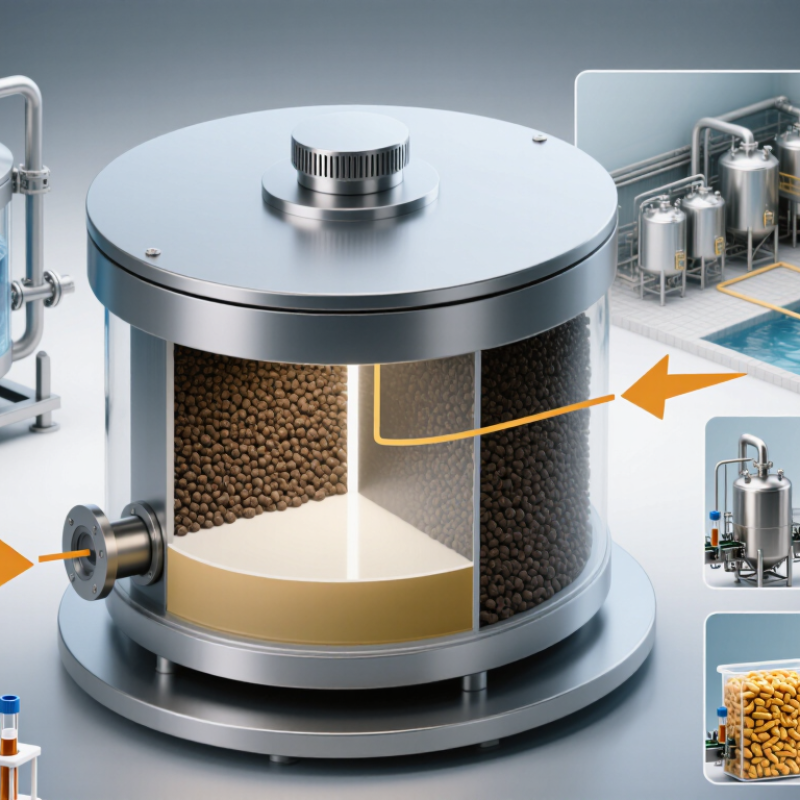
Centrifugation separation is a mechanical process that separates materials by rotating a sample at high speed. It uses differences in density, particle size, and shape. A centrifuge creates centrifugal acceleration around the rotor. Denser particles move outward and form a compact layer. Lighter components remain closer to the center. This movement is called sedimentation. Speed matters. The effective force is usually expressed as relative centrifugal force, or RCF, rather than RPM. RPM alone can mislead because rotor radius changes the applied force.
In practical work, a sample enters a balanced vessel inside a rotating rotor. The spinning motion pushes particles through the surrounding liquid. When the applied force exceeds resistance from the liquid, particles begin settling. A pellet forms at the bottom or outer edge. The liquid above it is called the supernatant. Technicians may then remove the supernatant carefully, avoiding disturbance. Separation quality depends on density difference, particle size, viscosity, temperature, and spin duration. A cold, viscous sample may require more time than a warm, dilute sample. Small changes matter.
Reliable operation begins with compatible vessels, accurate balancing, and verified settings. Operators should record RCF, duration, temperature, and sample volume. Validation can compare recovery, clarity, and repeatability across several runs. The method is not flawless. Real samples rarely behave ideally. Over-spinning can compact material too tightly, while under-spinning can leave particles suspended. Clear layers may still contain unseen contaminants. Visual inspection alone is insufficient. Results need measurement and occasional protocol adjustment.
Centrifugation separation technology uses rotational force to divide materials according to density. A rotating bowl pushes denser particles outward, while lighter liquids remain closer to the center. The separation becomes sharper as rotational speed, residence time, and density difference increase. For process control, engineers often calculate relative centrifugal force using RCF = 1.118 × 10⁻⁵ × radius × rpm², with radius measured in centimeters. Small changes matter.
In wastewater treatment, centrifuges can thicken sludge before dewatering. The U.S. Environmental Protection Agency’s 2023 Water Reuse Action Plan identifies solids management as a major operating concern in expanding treatment systems. In mineral processing, density-based separation remains important because recovered particles may differ only slightly in composition. A 2024 industry analysis valued the global industrial centrifuge market at several billion U.S. dollars, reflecting demand from water, food, chemical, and pharmaceutical operations. The exact figure varies by market definition.
Inside a decanter centrifuge, feed enters through a narrow pipe and meets a fast-moving cylindrical bowl. A conveyor slowly removes the heavier cake. Clarified liquid exits separately. It looks simple. It is not. Feed viscosity, particle shape, temperature, and polymer dosage can change performance within minutes. Field operators should verify results with solids concentration, turbidity, and moisture tests rather than trusting speed settings alone. Reports often emphasize efficiency, but energy use and wear deserve equal attention. A poorly tuned centrifuge may separate quickly while producing wetter solids. That trade-off is easy to overlook.
What Is Centrifugation Separation Technology?
Main Types of Centrifuges and Separation Methods
Centrifugation separates materials by density through controlled rotational force. The method is common in wastewater treatment, food processing, biotechnology, and chemical production. Grand View Research estimated the global centrifuge market at about USD 8.4 billion in 2023. Its report also forecasts continued growth through 2030, driven by laboratory and industrial demand.
Decanter centrifuges continuously remove solids from liquids, making them useful for sludge thickening and dewatering. Disc-stack centrifuges handle fine particles and liquid-liquid separation at high speeds. Tubular-bowl units suit clarification when solids levels remain low. Basket centrifuges collect solids in batches, often through filtration or sedimentation.
Small differences matter.
Separation may rely on sedimentation, filtration, clarification, or density-based phase splitting. In a treatment plant, a decanter can reduce sludge volume before disposal. The U.S. Environmental Protection Agency reported approximately 7.2 million dry metric tons of biosolids generated in 2021, showing the scale of solids management needs. Actual performance depends on feed viscosity, particle size, temperature, and residence time.
Operators should not trust appearance alone. A clear liquid may still contain fine suspended solids. Excessive speed can increase energy use and damage sensitive particles. In practice, pilot testing often reveals problems that laboratory assumptions miss. This is where centrifuge selection becomes less perfect, but more reliable.
Centrifugation separates suspended particles or liquid phases by applying centrifugal force. The required equipment depends on particle size, density difference, throughput, and whether the process is batch or continuous.
The chart shows representative upper relative centrifugal force levels for common centrifuge classes. Actual values vary with rotor design, radius, operating speed, and sample properties. Differential centrifugation uses successive force steps, while density-gradient centrifugation separates particles according to their buoyant density.
Centrifugation separates materials by density through controlled rotational force. A spinning rotor pushes heavier particles outward, while lighter phases remain closer to the center. In industry, this principle supports wastewater treatment, food processing, chemical production, and biotechnology. The United Nations World Water Development Report 2024 states that agriculture accounts for about 70% of global freshwater withdrawals. Efficient sludge dewatering can therefore reduce transport weight and improve water recovery. The result is practical, but not effortless.
In scientific laboratories, centrifuges prepare blood, cells, proteins, and environmental samples. Researchers use different speeds, temperatures, and rotor designs to protect fragile biological structures. The global life-science tools market continues to expand, and MarketsandMarkets has identified centrifugation as a core sample-preparation technology. Small errors matter. An incorrect balance can damage equipment or distort results. That detail is often underestimated.
Medical laboratories depend on centrifugation for plasma separation, urine testing, molecular diagnostics, and blood-component preparation. The World Health Organization’s Global Health Observatory reports that noncommunicable diseases cause roughly 74% of deaths worldwide, increasing demand for reliable clinical testing. Centrifugation does not create accurate data by itself. Calibration, maintenance, validated procedures, and trained operators remain essential. In real facilities, workflow pressure sometimes encourages shortcuts, and that is where reliability can weaken.
What Is Centrifugation Separation Technology?
Centrifugation separation technology uses rotational force to divide materials by density, size, or shape. A spinning bowl creates acceleration far above normal gravity. Denser particles move outward, while lighter liquid stays closer to the center. The process appears simple. Its performance is not.
Factors That Affect Centrifugation Separation Performance
Relative centrifugal force matters more than rotational speed alone. Two machines can run at the same speed but produce different separation results. Particle size and density difference also control settling behavior. Fine particles may require more force or longer residence time. Liquid viscosity changes with temperature, so cold feed can separate poorly. Keep temperature stable. Feed rate is equally important. Excessive flow reduces residence time and may carry solids into the outlet. High solids loading can overload the bowl and disturb the separated layers.
Bowl geometry, internal screens, and discharge settings influence clarity and recovery. Uneven feeding can create vibration, while poor balance may reduce safety and consistency. Operators should inspect samples from both outlets, not rely only on appearance. A clear liquid can still contain fine particles. In practice, small pilot tests often reveal problems hidden by calculations. I have found that laboratory predictions are useful, but rarely perfect. Feed properties can change during a production shift. Regular sampling, equipment cleaning, and vibration checks help identify those changes before separation performance declines.
| Separation Factor | How It Affects Separation | Representative Data or Relationship | Expected Performance Impact | Practical Control |
|---|---|---|---|---|
| Relative centrifugal force (RCF) | RCF determines the effective acceleration applied to suspended particles. It is more useful for comparing centrifugation conditions than rotational speed alone. | RCF = 1.118 × 10⁻⁵ × r × RPM2, where r is the rotational radius in centimeters. | Increasing RCF generally shortens settling time, although excessive force can compact pellets or damage shear-sensitive materials. | Specify both RCF and run time; do not report RPM alone. |
| Particle diameter | Larger particles experience greater drag-independent settling velocity under Stokes-type conditions. | For small, spherical particles in laminar flow, settling velocity is approximately proportional to particle diameter squared: v ∝ d2. | A twofold increase in particle diameter can increase ideal settling velocity by approximately fourfold. | Use pretreatment, flocculation, or filtration when the target particles are very fine. |
| Density difference | Particles separate when their density differs from that of the liquid. The greater the density difference, the stronger the sedimentation tendency. | Under Stokes’ law, settling velocity is proportional to the density difference: v ∝ (ρp − ρf). | A small density difference produces slow separation and may require higher RCF, longer residence time, or density-gradient methods. | Adjust the liquid composition only when compatible with the product and process requirements. |
| Liquid viscosity | Viscous liquids create greater resistance to particle motion and reduce sedimentation velocity. | For laminar settling, velocity is approximately inversely proportional to dynamic viscosity: v ∝ 1/μ. | Higher viscosity increases clarification time and can reduce throughput at the same centrifugal force. | Control temperature, dilution, or formulation viscosity where process specifications allow. |
| Operating temperature | Temperature changes liquid viscosity, density, vapor pressure, and the stability of temperature-sensitive materials. | Water viscosity is approximately 1.00 mPa·s at 20°C and approximately 0.89 mPa·s at 25°C. | Moderate warming can improve settling by lowering viscosity, but heat-sensitive samples may lose activity or quality. | Use temperature control and verify the actual sample temperature during operation. |
| Centrifugation time | Particles need sufficient residence time to travel through the liquid and reach the collection zone or form a compact layer. | At fixed particle properties and RCF, increasing time increases the available settling distance; complete separation is limited by re-suspension and equipment geometry. | Insufficient time causes solids in the supernatant; excessive time may reduce productivity or compact difficult-to-resuspend pellets. | Determine time from settling tests, process scale, and required clarification quality. |
| Rotor radius and geometry | Radius affects RCF at a given RPM, while rotor path length and flow pattern influence residence time and separation efficiency. | At constant RPM, RCF increases linearly with radius. A larger radius produces higher RCF at the same rotational speed. | Different rotors operated at the same RPM can deliver different separation performance. | Use the rotor-specific maximum speed, radius, and operating instructions. |
| Feed solids concentration | High solids loading increases particle interactions, hindered settling, viscosity, and the likelihood of cake formation. | Dilute settling models may not apply at high concentrations; hindered settling becomes increasingly important as solids loading rises. | Clarification can decline, while torque, power demand, and solids discharge difficulty can increase. | Reduce feed loading, use staged separation, or select equipment designed for concentrated suspensions. |
| Particle shape and agglomeration | Non-spherical particles have different drag characteristics from ideal spheres. Agglomeration increases effective particle size but may reduce product quality. | Stokes’ law assumes spherical particles, laminar flow, and negligible particle interaction; real particles may deviate significantly. | Irregular or fragmented particles may settle more slowly, while agglomerates can settle faster but may be fragile. | Manage mixing intensity, pH, ionic strength, and dispersant or flocculant conditions. |
| Flow rate and residence time | In continuous centrifuges, the feed flow rate determines how long particles remain in the separation zone. | For a fixed effective separation volume, increasing flow rate reduces residence time approximately in inverse proportion. | Higher flow can increase throughput but may allow more solids to exit with the clarified liquid. | Balance throughput against target clarification and adjust feed rate gradually. |
| Liquid level and feed distribution | Uneven filling, poor feed distribution, or excessive liquid depth can create short-circuiting and non-uniform settling conditions. | Actual separation depends on effective settling area, liquid depth, flow distribution, and equipment-specific hydrodynamics. | Poor distribution reduces usable separation area and may cause variable product quality. | Maintain recommended fill levels and inspect feed channels, seals, and distribution components. |
| Sample or product stability | Mechanical stress, prolonged residence time, oxygen exposure, and temperature changes can alter biological, chemical, or physical properties. | The suitable RCF and time depend on material sensitivity; there is no universal operating condition for all products. | Over-processing can cause cell disruption, emulsion formation, denaturation, or loss of functional activity. | Validate conditions using recovery, purity, integrity, and stability measurements. |
| Note: Stokes-based relationships apply primarily to dilute suspensions of small, approximately spherical particles under laminar-flow conditions. Industrial and concentrated suspensions may require empirical testing, centrifugal settling analysis, or equipment-specific scale-up calculations. | ||||