Why Choose Laboratory Fermentation Systems for Your Lab?

Choosing laboratory fermentation systems is not merely a purchasing decision. It is a practical investment in repeatable experiments, reliable measurements, and clearer process development. A well-designed system helps researchers observe how temperature, pH, agitation, dissolved oxygen, and feeding strategies affect microbial or cell growth.

The roots of fermentation science remain relevant. Louis Pasteur wrote, “Fermentation is life without air.” Modern systems extend that insight with sensors, automated controls, sterile vessels, and digital records. These features allow researchers to examine changes inside a controlled environment, rather than relying on assumptions from a shaking flask.

Small details matter.

A laboratory fermentation system can reveal oxygen limitations before they damage a larger run. It can also show whether a culture responds poorly to a feeding rate or mixing pattern. Experienced researchers know that automation does not remove responsibility. Sensors require calibration. Sampling ports require careful handling. Software settings can still be misunderstood.

That is the uncomfortable part.

No platform guarantees successful fermentation. Operators must understand biology, equipment limits, and data quality. Poor calibration may produce impressive graphs with weak scientific value. Likewise, a highly advanced vessel may be unsuitable for a simple teaching experiment.

The strongest choice depends on the laboratory’s real objectives. A research team may need flexible scale-up studies, while a teaching laboratory may value safety and ease of use. When selected thoughtfully, laboratory fermentation systems connect experimental design with practical process knowledge. They make invisible biological changes easier to measure, compare, and improve. Still, every result deserves scrutiny before it guides a larger decision.
Why Choose Laboratory Fermentation Systems for Your Lab?

What Is a Laboratory Fermentation System?

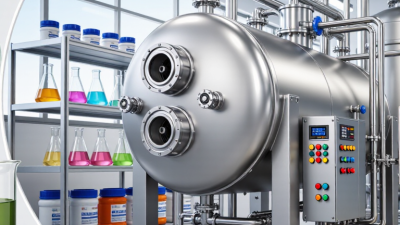
A laboratory fermentation system is a controlled vessel used to grow microorganisms, cells, or other biological cultures under measured conditions. It is more than a heated tank. The system usually includes a vessel, agitator, temperature probe, pH sensor, dissolved oxygen sensor, and sterile air supply. These parts work together to create a repeatable environment for fermentation experiments.

In daily laboratory work, researchers adjust temperature, mixing speed, airflow, and nutrient feeding. A transparent vessel can reveal foam, color changes, or uneven growth. Sensors provide numerical evidence instead of relying only on appearance. Data logging also helps compare batches and identify process changes. A slight pH drift may signal contamination, poor mixing, or nutrient depletion. Small details matter.

The system supports early research before a process moves to larger equipment. It can help evaluate yields, culture behavior, oxygen demand, and feeding strategies with limited material. From practical experience, automation improves consistency, but it does not remove the need for judgment. Sensors require calibration, and sterile connections still need careful inspection. I have found that a well-designed system saves time, though setup can be less simple than expected. That limitation deserves attention. Researchers should select equipment according to culture volume, process sensitivity, cleaning methods, and data requirements. An oversized system may waste resources, while an undersized vessel can distort growth conditions.

How Does a Laboratory Fermentation System Work?

A laboratory fermentation system recreates controlled conditions for growing microorganisms or cultured cells. It usually includes a vessel, mixing device, aeration line, sensors, and control unit. Researchers add a prepared culture medium and introduce a measured inoculum under controlled conditions. Clean handling matters. Small contamination can change the entire experiment.

During operation, the impeller keeps nutrients and cells evenly distributed. Air enters through a sparger, while the system monitors dissolved oxygen. Sensors also measure temperature, pH, pressure, and sometimes foam. When conditions shift, the control unit adjusts heating, cooling, stirring speed, airflow, or nutrient addition. This creates a responsive environment rather than a fixed container.

The process is not perfectly predictable. A sensor can drift, and foam may affect measurements or sampling. Experienced users check calibration before starting and compare readings with visual observations. They may notice unusual color, odor, viscosity, or gas flow before the data clearly changes. Samples are collected through a sealed port for testing growth, product concentration, or contamination. These observations support reliable decisions, although laboratory results still require careful interpretation and repeated trials.

Why Choose Laboratory Fermentation Systems for Your Lab?

How Does a Laboratory Fermentation System Work?

Laboratory fermentation systems combine temperature control, pH regulation, agitation, aeration, and sensor feedback to maintain stable culture conditions. The chart shows representative starting setpoints commonly used for different laboratory cultures. Actual values may be adjusted according to the strain, cell line, medium, and process objective.

Which Components Make Up a Laboratory Fermentation System?

Laboratory fermentation systems help researchers study microbial or cell-based production under controlled conditions. Their value depends on how well each component works together. A typical system includes a glass or stainless-steel vessel, an agitator, a motor, and a sterile sampling port. The vessel provides a defined working volume. The agitator distributes nutrients, heat, and dissolved gases throughout the culture.

Sensors form the system’s measurement core. Common probes monitor temperature, pH, dissolved oxygen, and pressure. A controller adjusts heating, cooling, stirring, and gas flow according to programmed limits. The sparger introduces air or another approved process gas through small openings. Peristaltic pumps can add nutrients, acid, base, or antifoam solution. An exhaust line usually includes a sterile filter, reducing contamination risks during gas release. These parts appear simple, but poor sensor placement can produce misleading readings. Real laboratory experience often reveals this gap.

Tips: Check calibration before every important run. Inspect tubing, seals, and filters for cracks or blockage. Keep the sampling path short and clean. Record changes in agitation, temperature, and feeding rates. Do not assume a larger vessel gives better results. Mixing patterns may change sharply with scale. A well-designed setup should also allow easy cleaning, safe access, and clear data logging. Small design choices matter.

What Benefits Do These Systems Provide for Laboratory Research?

Why Choose Laboratory Fermentation Systems for Your Lab?

What Benefits Do These Systems Provide for Laboratory Research?

Laboratory fermentation systems give researchers tighter control over biological processes. Temperature, pH, agitation, airflow, and dissolved oxygen can be monitored in one vessel. This control helps teams compare experiments under consistent conditions. A researcher can test a changed nutrient level without unintentionally changing the mixing speed.

The data becomes more useful, too. Automated logging records trends that manual notes may miss, such as a gradual pH drop overnight. Small working volumes reduce material use during early trials. They also support scale-down studies before larger production equipment is considered. Careful sampling remains important. A clean sample port and a clear schedule can reduce avoidable contamination risks.

These systems are not magic. A drifting probe can weaken an otherwise careful experiment. Poor calibration, uneven mixing, or delayed sampling may create misleading results. Experienced users check sensor performance before inoculation and document every adjustment. They also compare automated readings with independent measurements when results seem unusual.

That discipline matters.

Modern systems can improve repeatability, but they do not replace scientific judgment. Researchers still need suitable controls, validated methods, and realistic interpretation of growth data. In practice, the strongest benefit is a more visible process: conditions, changes, and unexpected behavior can be examined while the experiment is still running.

Why Choose Laboratory Fermentation Systems for Your Lab? - What Benefits Do These Systems Provide for Laboratory Research?

Research Dimension Key Metric or Capability Typical Laboratory Information Benefit for Laboratory Research
Process Control Temperature regulation Temperature can be measured continuously and controlled according to the requirements of the microorganism, cell line, or enzyme system. Maintains a stable growth environment and improves the reproducibility of biological experiments.
Process Control pH monitoring and adjustment Inline pH probes can monitor culture conditions, while acid or base pumps can make controlled adjustments. Helps maintain an optimal pH range, supports cell or microbial activity, and reduces variability between batches.
Oxygen Management Dissolved oxygen control Dissolved oxygen is commonly managed by adjusting agitation, airflow, oxygen enrichment, or related operating parameters. Supports aerobic cultures and helps researchers investigate oxygen-transfer effects on growth and product formation.
Mixing Agitation control Impeller speed can be adjusted to improve mixing and suspend cells or microorganisms, subject to shear-sensitivity limits. Promotes more uniform nutrient, temperature, and oxygen distribution throughout the culture vessel.
Feeding Strategy Controlled nutrient addition Substrates, nutrients, or inducers can be added according to timed, feedback-based, or manually defined feeding strategies. Enables batch, fed-batch, and other controlled cultivation studies while helping prevent substrate limitation or excess.
Data Collection Real-time monitoring Common monitored variables include temperature, pH, dissolved oxygen, agitation speed, airflow, pressure, and feed rate. Provides a clearer view of process behavior and helps researchers identify changes before they affect the final result.
Experimental Design Parameter flexibility Researchers can independently modify operating conditions such as temperature, pH, agitation, aeration, and feeding profiles. Makes it easier to compare conditions, optimize protocols, and study cause-and-effect relationships.
Scale-Up Studies Transferable process knowledge Laboratory systems allow evaluation of growth kinetics, oxygen transfer, mixing behavior, feeding requirements, and process limits. Generates technical information that can support later development in pilot or larger-scale bioprocess equipment.
Reproducibility Standardized operating conditions Automated control and recorded setpoints reduce reliance on manual adjustments during cultivation. Improves consistency between experimental runs and strengthens the reliability of comparative studies.
Research Applications Broad biological use Microbial culture Cell culture Enzyme production Metabolite studies Supports research in biotechnology, microbiology, bioprocess engineering, fermentation development, and cell-based production.
Sampling Controlled sample access Sampling ports can be used to collect culture material during a run while limiting unnecessary exposure of the vessel contents. Allows researchers to track biomass, substrate consumption, metabolite formation, and other time-dependent changes.
Sterility Closed and cleanable vessel design Many laboratory systems use sterilizable vessels, aseptic connections, and cleaning or sterilization procedures appropriate to the configuration. Reduces contamination risk and helps protect the validity of culture-based experiments.
Resource Efficiency Small working volumes Laboratory fermenters are available in compact working volumes that require less medium, inoculum, and test material than larger production systems. Makes screening and optimization more economical, particularly when biological materials or reagents are limited.
Automation Programmed operation Controllers can manage setpoints, alarms, data logging, and selected additions according to a defined experimental method. Reduces repetitive manual work and allows researchers to focus more on experimental analysis and process development.
Result Evaluation Quantitative process analysis Recorded process data can be compared with offline measurements such as optical density, dry cell weight, product concentration, or substrate concentration. Helps connect operating conditions with biological performance and supports evidence-based process optimization.

How Can a Lab Choose the Right Fermentation System?

Choosing a laboratory fermentation system begins with the experiment, not the equipment catalogue. Define the organism, working volume, expected growth rate, and process temperature. A small microbial study may need a compact vessel with accurate stirring and oxygen control. Cell cultures can require gentler mixing and stricter shear protection. The system should also match your laboratory’s available space, utilities, and safety procedures.

Check control performance carefully. Reliable pH, temperature, dissolved oxygen, and agitation sensors are essential for repeatable results. Ask how often sensors need calibration and how easily they can be replaced. Sterilization matters too. Review vessel materials, seals, sampling ports, and cleaning access before purchase. A system that is difficult to clean can quietly increase contamination risk. It may look efficient on paper.

Data handling deserves equal attention. Choose software that records trends, alarms, calibration history, and operator actions. Clear records support troubleshooting and strengthen experimental credibility. Confirm whether the system can connect with your existing instruments. Technical support, training, spare parts, and documented maintenance procedures can influence long-term reliability more than the initial price. In practice, teams sometimes overestimate capacity and underestimate setup time. That mistake is common. A smaller, well-controlled system may produce better evidence than a larger unit used inconsistently. Leave room for future protocols, but avoid paying for features your lab cannot validate or maintain.

Go to Top